2025’s Computing Sciences Area Summer Program comprised 152 students, affiliates, and guest faculty. Several students were also enrolled in programs facilitated through Berkeley Lab’s Workforce Development & Education. Interns worked across a variety of departments and gained hands-on experience with cutting-edge tools. Just a few examples of their incredible projects: Beste Oztop delved into the resource and energy utilization characteristics of GPU jobs running on NERSC’s Perlmutter. Nathra Ramrajvel’s research with ESnet explored time-series forecasting methods to predict cache utilization. Jonathan Sar-Shalom worked with the SciData division on GNN4ITK Pipeline, a graphical neural network created to reconstruct particle tracks inside the ATLAS experiment at the LHC at CERN. Baboucarr Dibba developed neural network surrogate models to accelerate the Intermediate Complexity Atmospheric Research (ICAR) model, a part of AMCR’s Computer Languages and Systems Software (CLaSS) Group.
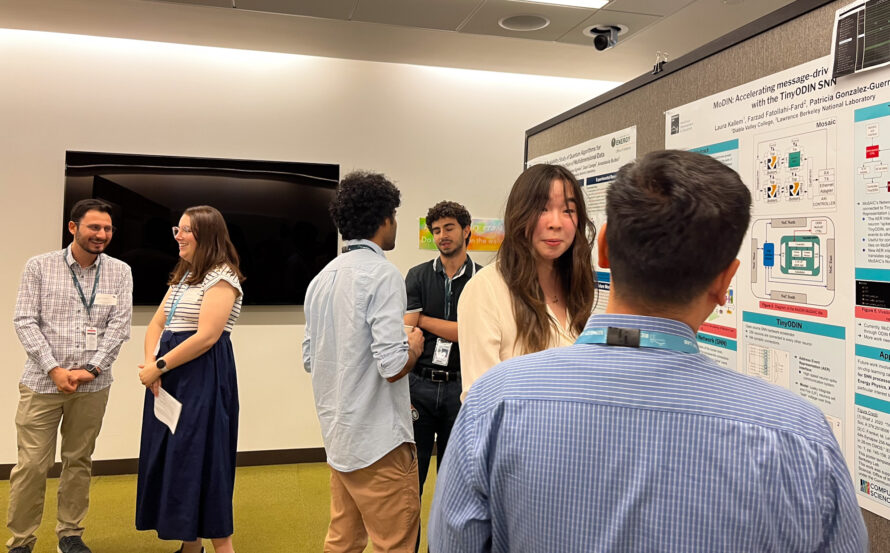
Over ten weeks, students and staff came together in Building 59 and developed their professional development skills, like fine-tuning their resumes and science posters. Students also had the opportunity to tour NERSC facilities, the Advanced Light Source, and the Molecular Foundry. On August 5, students got an opportunity to pull together everything that they had learned during the Computing Sciences Area Poster Session.
Summer Program co-chairs Andy Nonaka and Dan Martin led the program for the first time this year. They reflected afterwards that they had both greatly enjoyed their opportunity to work with students this summer. “I hope the students and visitors had a meaningful and positive experience that will help them in their career paths,” commented Nonaka. “Also, I hope the additional CSA Summer Programming enhanced their experience and gave them insights into the broad research and applications LBNL’s CSA is involved in.” Martin agreed, adding, “It was great to see so many young scientists so excited to share what they’ve accomplished and learned over the summer. They are leaving with a better understanding of what a career in science and at the national labs could look like for them. The energy they bring is invigorating to us as lab staff, too!”
To see our summer poster gallery, visit our Google Album.
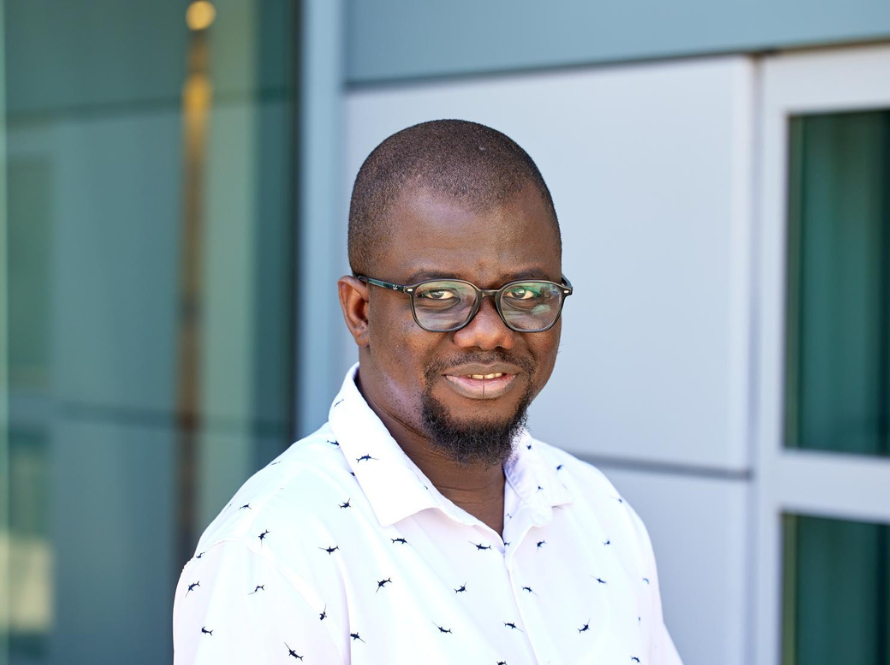
Baboucarr Dibba
Baboucarr Dibba recently completed a Ph.D. in Mathematical Statistics and Interdisciplinary Studies at the University of Texas Rio Grande Valley (UTRGV). He has been affiliated with the Lab for the past two years as a student researcher and will continue on as a faculty affiliate following his graduation.
This summer, he’s focused on developing neural network surrogate models to accelerate the Intermediate Complexity Atmospheric Research (ICAR) model, a part of AMCR’s Computer Languages and Systems Software (CLaSS) Group.
Dibba says the most exciting aspect of his research is seeing how the Lab bridges scientific computing and AI to solve real-world problems.. “Engage with people outside your immediate project,” he recommends, “attend division talks, and don’t hesitate to ask questions. Berkeley Lab is a place where curiosity is encouraged, and the mentorship and collaboration opportunities are second to none.”
(AMCR, CLaSS Group)
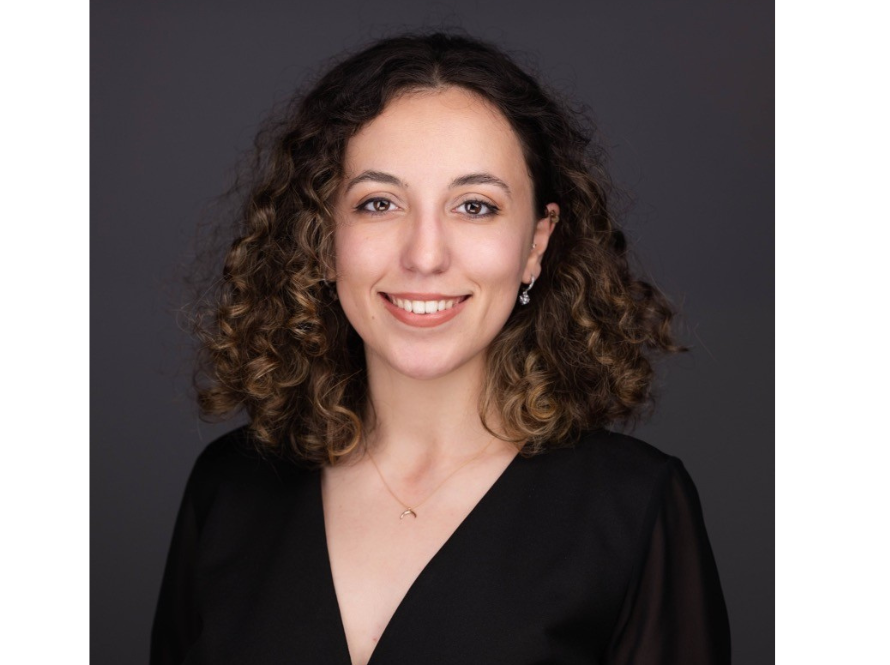
Beste Oztop
Beste Oztop is a PhD student at Boston University, starting her third year this fall. Her current research focuses on the resource and energy utilization characteristics of GPU jobs running on NERSC’s Perlmutter. “This work is particularly exciting,” Oztop remarks, “because my findings can offer tangible solutions to NERSC users.”
Oztop has been amazed by the wide breadth of research in the Computing Sciences Area. “ I am grateful for the chance to learn more about [my colleagues’] research and present my own work to them,” she comments, “I am confident that this internship will significantly guide my career goals after graduation.”
(NERSC)
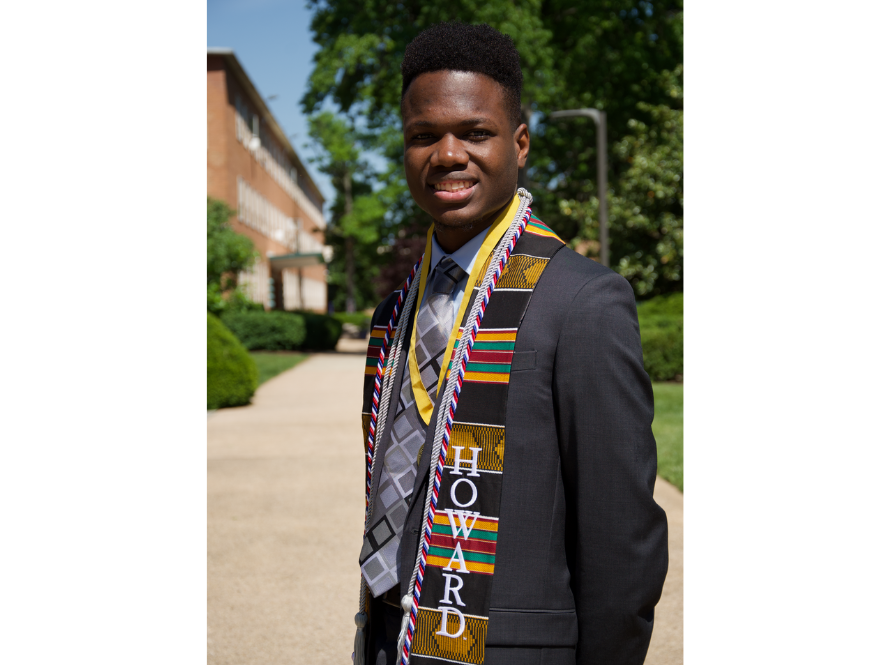
Desvaun Drummond
Desvaun Drummond is a PhD student at the Department of Electrical Engineering and Computer Sciences at University of California, Berkeley. He is a WD&E Intern in the GEM Program, part of the National GEM Consortium. This summer, he’s contributing to a larger project in the AMCR Division focused on developing hardware accelerators to better support the computational demands of multiscale simulations in scientific computing applications such as Matcha, a virtual T-cell simulator.
Drummond says that, “The most exciting and innovative aspect of research at Berkeley Lab is its integrated approach to advancing computing across multiple frontiers. This includes breakthroughs in quantum and classical supercomputing, energy-efficient microelectronics, and the fusion of artificial intelligence with high-performance scientific computing. Together, these efforts are helping to set the stage for transformative technologies ranging from exascale supercomputers to the future quantum internet.”
(AMCR, CLaSS Group)

Hilary Utaegbulam
Hilary Utaegbulam is a graduate student at the University of Rochester where he studies neutrino physics as a member of the Deep Underground Neutrino Experiment (DUNE). At Berkeley Lab, he works with NERSC on Inference as a Service for DUNE. His work enables science experiments like DUNE and other particle physics collaborations to efficiently access trained machine learning models for inference.
Utaegbulam says that their project is especially interesting to him because he hopes that scientists will be able to use DUNE to detect a burst of low-energy supernova neutrinos. “We are developing systems to help particle physics experiments like DUNE extract,” he explains, “and analyze the data they collect, to allow them to make better measurements than ever before that will lead to a deeper insight into the workings of the physical world.”
(NERSC)
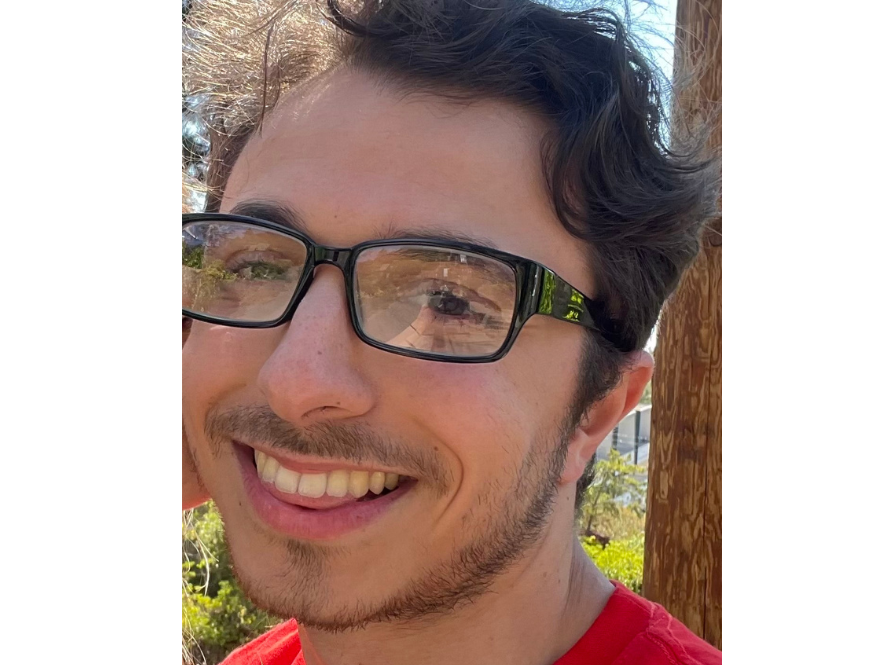
Jonathan Sar-Shalom
Jonathan Sar-Shalom is a senior at the University of Central Florida (UCF). He is spending his summer working in SciData Division, focusing on the GNN4ITK Pipeline. He observes, “I think the most innovative aspect of the research that is being done here at the lab is working to advance the use of AI in data processing. I think moving away from the traditional deterministic algorithms to neural networks for use in particle track reconstruction is innovative research.”
Sar-Shalom says that he’s always wanted to work at a national laboratory. “Working here at LBNL has definitely reaffirmed my dreams of working at a national lab,” he comments, “The work environment is everything I have hoped it would be.” He has been impressed by how excited researchers are to collaborate with each other and how seriously they take their research.
(SciData)

Jonathan Tabares
Jonathan Tabares is a sixth-year PhD student in physics at Florida International University (FIU). Jonathan Tabares is a WD&E intern in the NNSA-MSIIP program. This summer, he’s working with AMCR’s researchers and learning how Quantized Tensor Train (QTT) compression can be applied to Finite-Difference Time-Domain (FDTD) simulations of electromagnetic fields. This technique reduces this cost by compressing the data structures without sacrificing accuracy, which enables simulations of much larger or more complex systems.
Tabares has always admired the national laboratory system and is excited to be working at Berkeley Lab for a second year. “[My internship has] pushed me more toward pursuing work in computational science and software development,” he explains, “I’m now seriously considering roles in scientific computing, HPC, and applied research that go beyond traditional physics paths.”
(AMCR)

Laura Kallem
Laura Kallem is a sophomore at Diablo Valley College. Laura Kallem is a WD&E intern in the CCI program. This summer, she’s working with AMCR’s Computer Architecture Group to integrate an open source Spiking Neural Network (SNN), TinyODIN, as a hardware accelerator tile in the MoSAIC platform. She’s been excited to dive into solving modern computing problems, learning new programming languages, and gaining hands-on experience with digital hardware.
Kallem says, “My experience here at the Lab absolutely influenced my future goals and solidified my interest in pursuing a PhD. I really want to continue doing similar work. What I liked about working in research this summer is that it is intimidating but also extremely rewarding, and a place where curiosity is greatly appreciated.”
(AMCR, CAG)
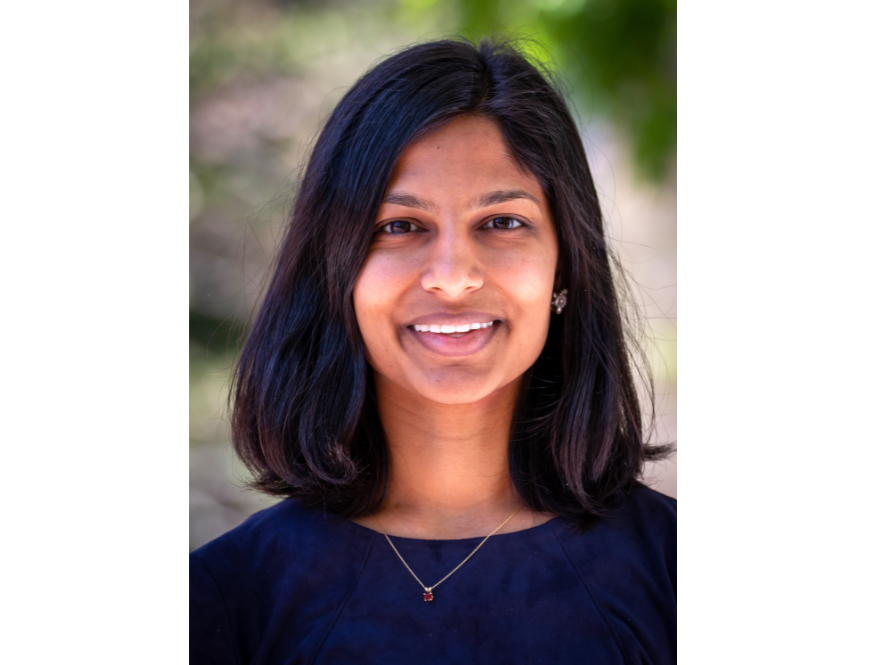
Mansi Sakarvadia
Mansi Sakarvadia is Computer Science Ph.D. student at the University of Chicago. She is a DOE Computational Sciences Graduate Fellow and working in the Sci Data Division. Her project is focused on scientific machine learning (SciML). She is helping her team design more robust scientific machine learning models and training workflows, and characterize the abilities of scientific machine learning models.
Sakarvadia has greatly enjoyed her work at Berkeley Lab and hopes to continue her research on these topics in the future. She notes that, “It is important to both read widely within and outside of your field of research and communicate with your team regularly for feedback. And most importantly, have fun! Your research will eventually serve as the building block for future research.”
(SciData, MLA Group)
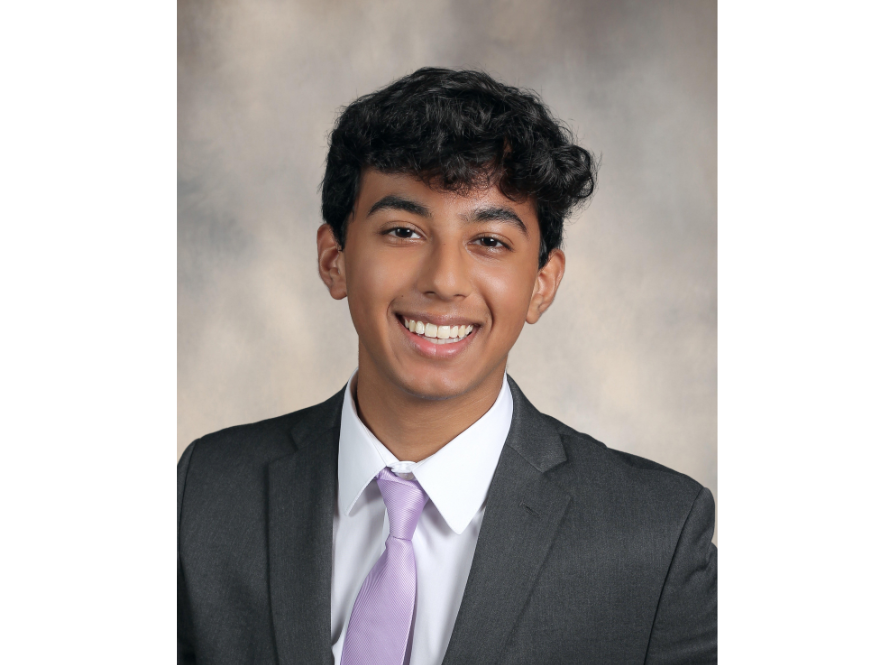
Mihir Putcha
Mihir Putcha is a junior at UC Berkeley. He is a returning WD&E intern and in the SEED Scholars @ LBNL program, with support from the SEED program at UC Berkeley. This summer, he’s working with AMCR researchers to develop a comprehensive benchmarking framework for evaluating quantum circuit instantiation methods within the Berkeley Quantum Synthesis Toolkit (BQSKit). “Providing a uniform baseline is important work because it will lead to the development and improvement of quantum instantiation algorithms and tools,” he notes.
Putcha is excited by how quickly quantum computing research has advanced. He’s been thrilled to get such a close look into the field during his internship. He says that, “Berkeley Lab has—and will continue to—open doors to unexpected research areas, help me figure out what classes and grad paths I want next, and expand a network I want to return to.”
(AMCR, ACSD Group)

Nathra Ramrajvel
Nathra Ramrajvel is a senior at the Massachusetts Institute of Technology. This summer, she’s working with ESnet researchers. Ramrajvel explored time-series forecasting methods (transformers, specifically) to predict cache utilization using the large dataset of access records for regional caches in Southern California, Chicago, and Boston.
Ramrajvel says, “The most exciting aspect of the research being done in the field of mathematics to me is that the problems being addressed come from a wide variety of fields. Applications include inkjet printing technologies, mode-locked lasers, wind turbines, data synthesis for wind energy and ocean currents, seismic imaging, and many more.”
(ESnet)
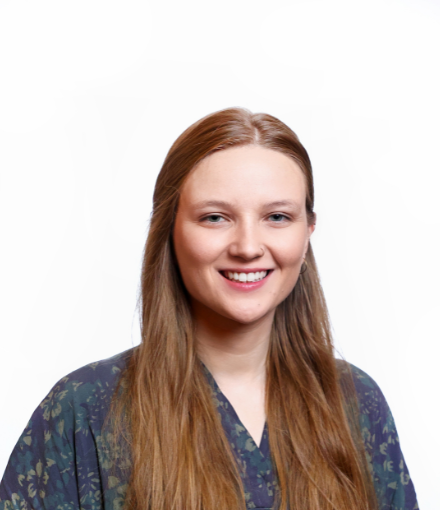
Rae Fadlovich
Rae Fadlovich is a first-year PhD student at the University of California, Santa Cruz. She is a DOE Computational Sciences Graduate Fellow. This year, she is working with AMCR researchers on characterizing ecologically relevant marine heatwaves in coastal ecosystems. She says that she has greatly enjoyed Berkeley Lab’s interdisciplinary environment and access to computational resources.
Fadlovich has always been interested in academia but her experience at Berkeley Lab has made her intent on pursuing a future working at a DOE laboratory. She tells future students to be curious and not afraid to step out of your comfort zone. “I accidentally ended up as a computational scientist,” she comments, “but I am forever grateful that I found this field!”
(AMCR)
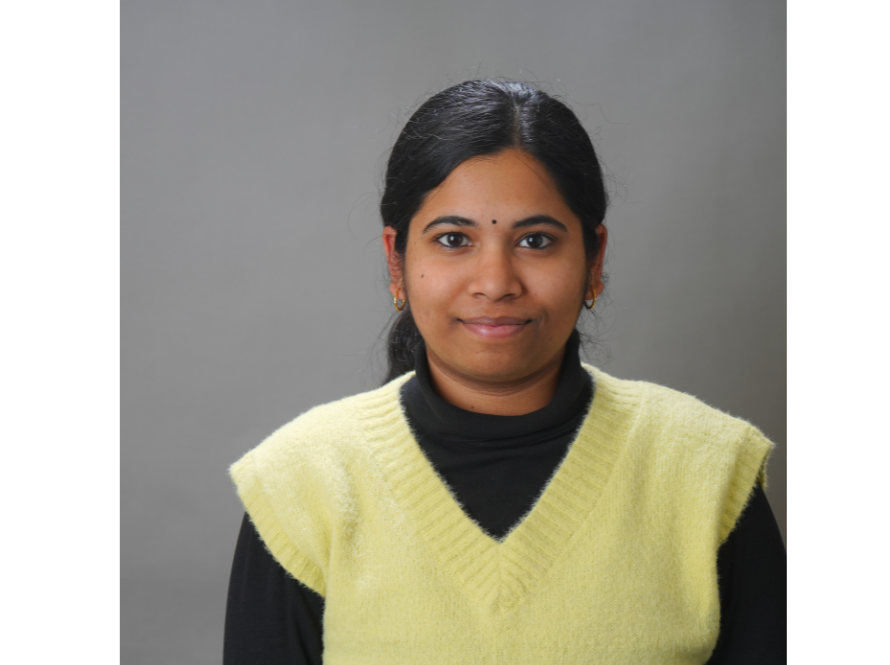
Sowmya Yellapragada
Sowmya Yellapragada holds a Master’s degree in Computer Science from the University of Illinois at Urbana-Champaign and will soon be starting a PhD program at the University of Utah. This summer, she worked for NERSC on load balancing algorithms in AMReX, specifically on implementing new space-filling curves and developing a load balancer for heterogeneous systems.
Sowmya says, “As a first-time intern at Berkeley Lab, I was thrilled to join NERSC and engage in such interesting work. Most of the work there revolves around bringing in new technologies like quantum computing, HPC, and AI, which is super exciting to me.” She found that her participation in the summer program allowed her to form meaningful connections and greatly appreciated the opportunity to work with her mentor, Kevin.
(NERSC)