
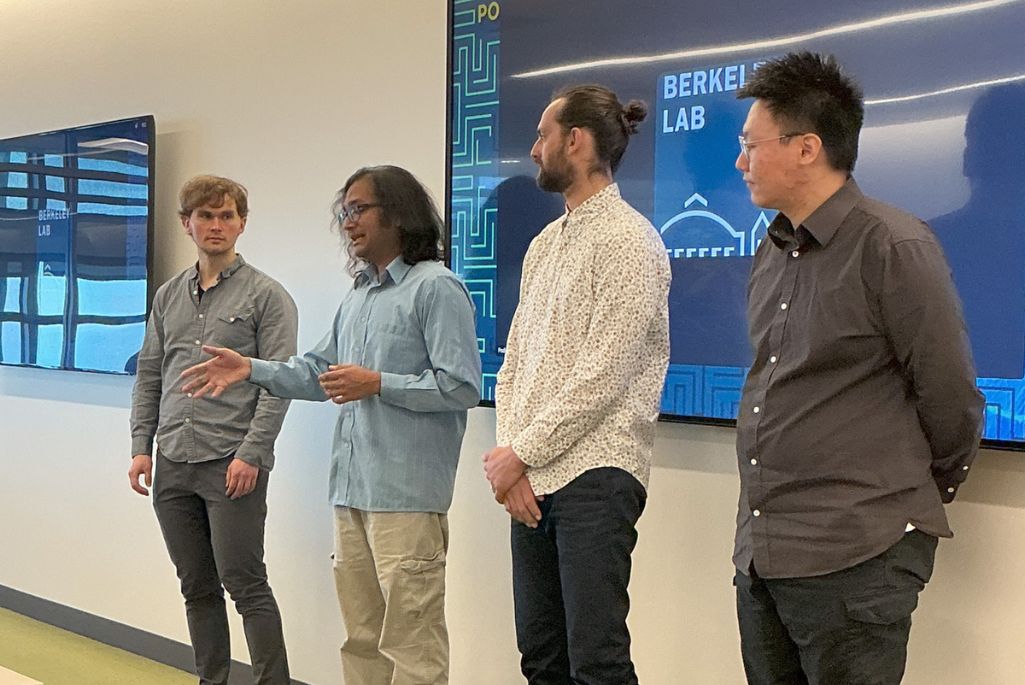
This month, 13 early-career researchers from Berkeley Lab Computing Sciences Area (CSA) presented their work at the 2026 Postdoc Symposium, an event focused on articulating the real-world impact of their discoveries.
More than just a showcase, the annual symposium is a launchpad for the next generation of scientific leaders. Through weeks of intensive coaching from CSA staff, participants hone their presentation skills and leave equipped with a professional recording of their talk to share with future employers. Since its inception in 2020, the program has helped shape 134 presentations, solidifying its role as a vital training ground for early-career researchers.
“Our postdoctoral researchers represent the future of scientific innovation, and the CSA Postdoc Symposium is one of our most direct and impactful investments in their success. This program provides a unique platform not only to share their work but also to receive expert coaching and feedback that cultivates the essential communication skills they need to become leaders in their fields. These are the skills that will help them secure funding, build collaborations, and translate discovery into real-world solutions,” said Stefan Wild, Director of Berkeley Lab’s Applied Mathematics and Computational Research Division and a key champion of the program.
Many of this year’s participants echoed the value of the program:
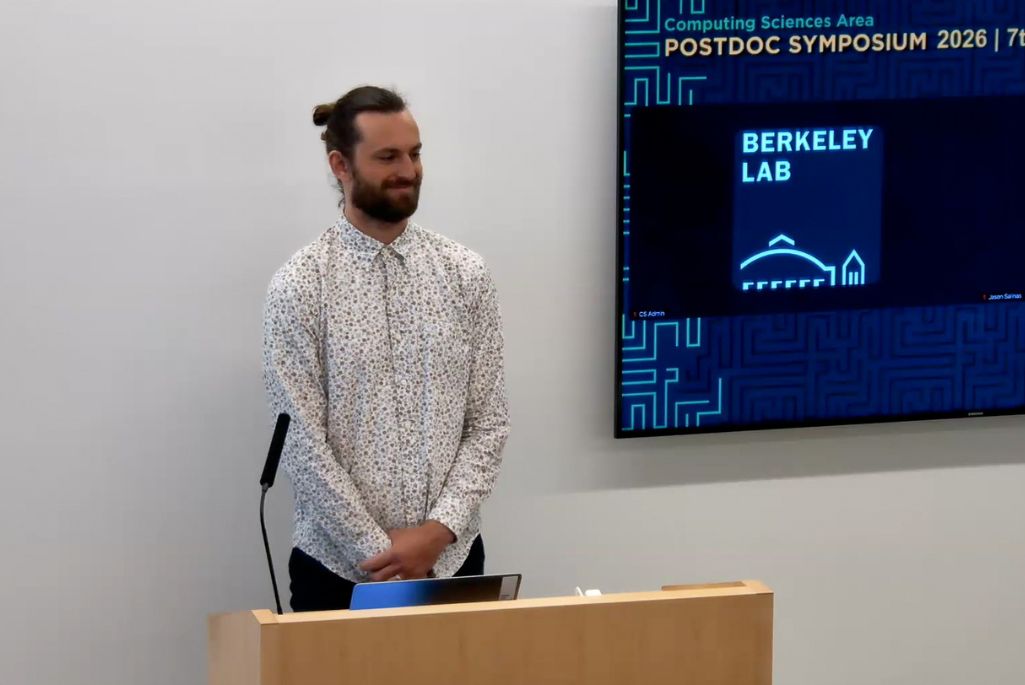
“Having participated before, I knew the Postdoc Symposium was a fantastic event and the perfect venue to communicate my research progress to a broad Berkeley Lab audience. It’s excellent practice for giving a non-technical talk—an invaluable skill for any scientist—and a great networking event. The connections I’ve made have led to exciting new research opportunities.
What makes the symposium unique is the opportunity to receive extremely valuable feedback on your presentation from senior scientists across different fields. This has directly helped me develop my ability to prepare talks for other conferences. To anyone who might be hesitant, I’d say the environment is incredibly supportive. The work you put in pays off directly; I’ve reused slides I created for the symposium in several other presentations. It’s well worth the time and a great opportunity to develop yourself as an early-career scientist,” said Alec Dektor, a postdoctoral researcher in Berkeley Lab’s Scalable Solvers Group.
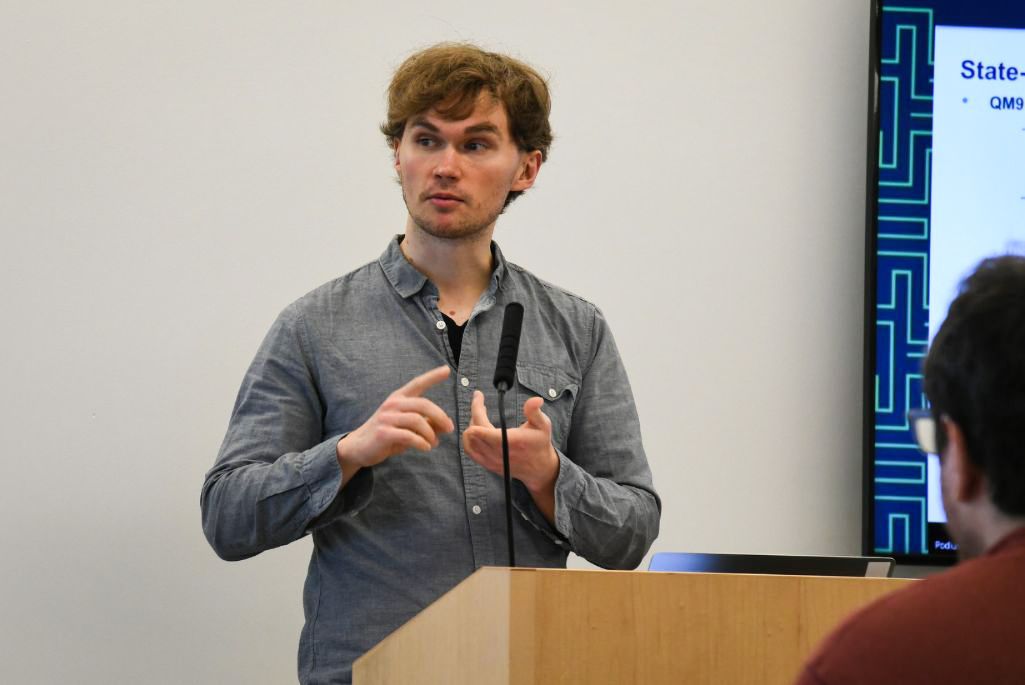
“After seeing recordings of past events, I was convinced of the value of sharing my research at the Postdoc Symposium. The process of revising and presenting my research presentation has given me more confidence and knowledge for future presentations. The tight-knit community here at Berkeley Lab makes it an incredible place to connect with researchers interested in similar topics and gather relevant, valuable feedback. I’d encourage everyone to seriously consider it—practicing your presentation skills is a great long-term investment for any career,” said Alex Morehead, 2025 Hopper Postdoctoral Fellow at NERSC.
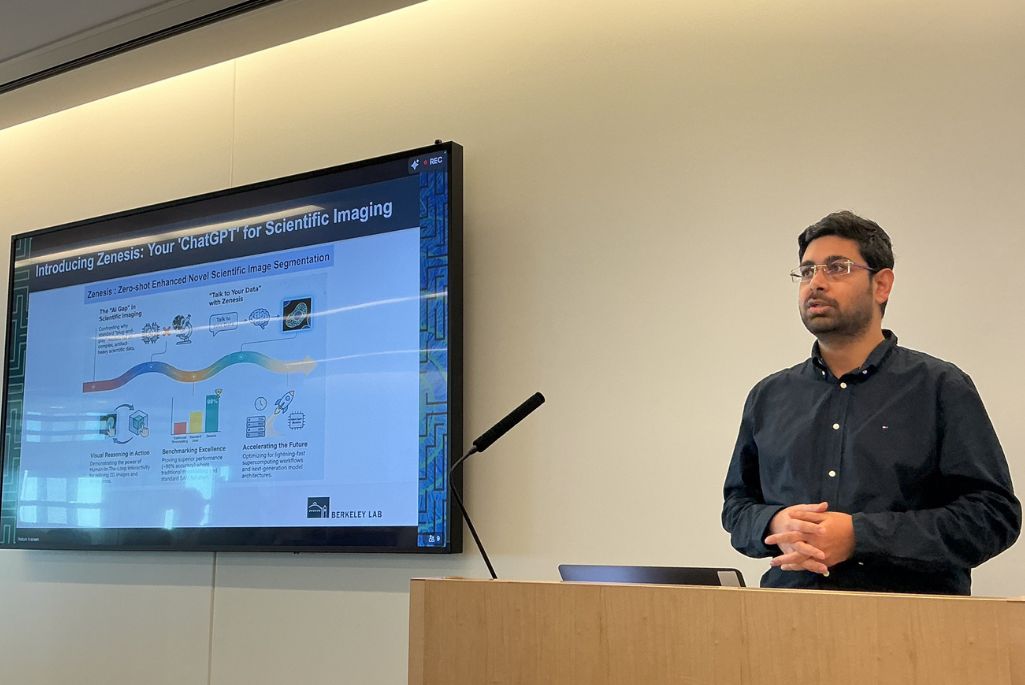
“What makes the Postdoc Symposium so unique is how supportive and well-structured the entire experience is. The focus isn’t just on presenting results; it’s on helping you translate technically deep work for a broad audience in a collaborative environment. Condensing my research in AI and scientific data analysis clarified my thinking and built new collaborations across the Lab. It’s a fantastic opportunity to gain confidence and practice a skill essential for any interdisciplinary career,” said Shubhabrata Mukherjee, a Machine Learning Postdoctoral Fellow in AMCR.
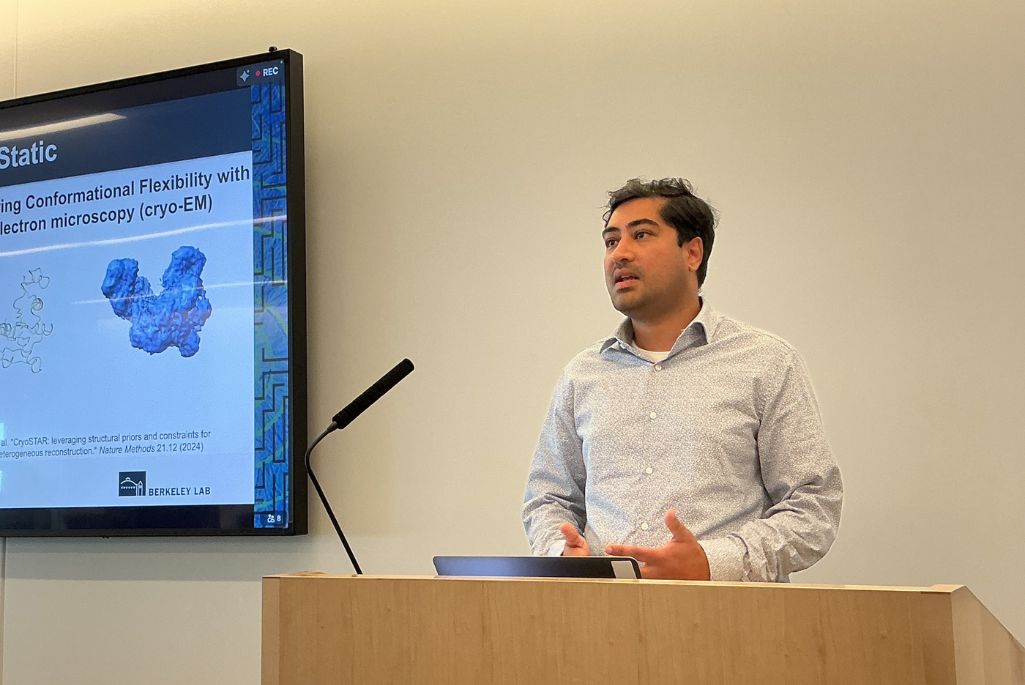
“The symposium is an excellent experiential learning opportunity. The feedback from organizers and peers was incredibly helpful, teaching me to communicate my work with clarity and impact. It’s the perfect preparation for job interviews and conferences because it gives you a safe space to practice the kind of communication that is essential for your career. The networking was terrific, and I made great connections and friends across the Lab,” said Nabin Giri, a postdoctoral researcher in Berkeley Lab’s Scientific Data Division (SciData), who is working on applying AI to structural biology.
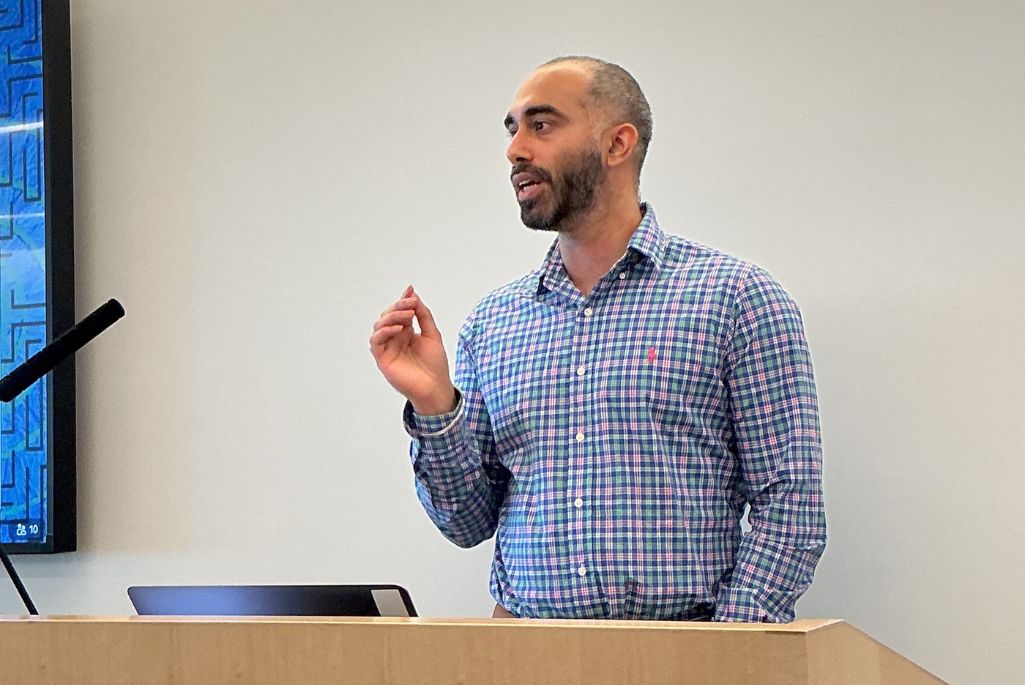
“What sets this symposium apart is that you’re presenting to experts from a wide range of scientific disciplines, not just specialists in your own field. The feedback I received on how people outside my immediate area perceive certain concepts was invaluable—that’s a perspective you don’t easily get within your own research group. Learning to adjust my slides and delivery for that audience is a critical skill. It’s an investment in one of the most important qualities of a successful scientist: the ability to communicate your work effectively across disciplinary boundaries,” said Navjot Sing, a postdoctoral researcher in Berkeley Lab’s AMCR.
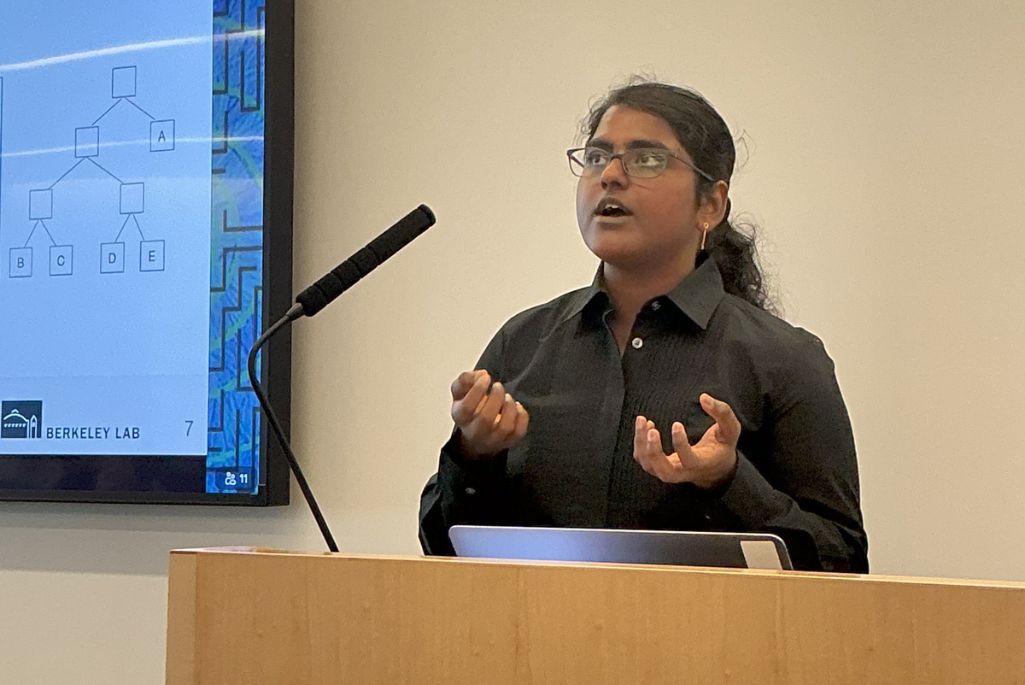
“The symposium process fundamentally changed how I approach presentations. The feedback from Lab leadership and communication experts was invaluable, and it helped me rethink how to design slides—for instance, learning to use the title to state the key takeaway instead of just a topic. That kind of clarity has a direct impact. When I later reached out to a Division Deputy who had provided feedback, he already had a clear understanding of my skills and research from the symposium. That familiarity made it much easier to identify opportunities for collaboration. It showed me that our work has more impact when people truly understand it, and this is the perfect place to learn that skill,” said Durga Mandarapu, a postdoctoral researcher in Berkeley Lab’s AMCR.
About Computing Sciences at Berkeley Lab
High performance computing plays a critical role in scientific discovery. Researchers increasingly rely on advances in computer science, mathematics, computational science, data science, and large-scale computing and networking to increase our understanding of ourselves, our planet, and our universe. Berkeley Lab's Computing Sciences Area researches, develops, and deploys new foundations, tools, and technologies to meet these needs and to advance research across a broad range of scientific disciplines.