
Featured Speakers: Jonathan Carter, Dan Martin, Andy Nonaka, Stefan Wild, and Sarah McGinn
Date: Tuesday, June 9, 2026
Time: 10 a.m. – 11 a.m.
Where: In Person: 50 Auditorium. Virtual: Zoom Available
Get to know Computing Sciences at Berkeley Lab during this essential overview of all the details you’ll need for success this summer!
Featuring opening remarks by: Jonathan Carter (Associate Lab Director for the CS Area), Dan Martin (2026 Summer Co-Chair, AMCR), Andy Nonaka (2026 Summer Co-Chair, AMCR), Stefan Wild (AMCR Division Director), and Sarah McGinn (CS Area Division Safety Coordinator)
View Event Slides
Host: Dan Martin
Date: Wednesday, June 10, 2026
Time: 10 a.m. – 11 a.m.
Where: Virtual Only: On Zoom
Meet fellow Summer Program participants and mingle with area scientists, staff, and experts in this fun online social event!
Hosted by Dan Martin (Summer Co-Chair and Group Lead, Applied Numerical Algorithms Group, AMCR Division).
NO VIDEO OR SLIDES ARE AVAILABLE FROM THIS EVENT.
Host: Ana Kupresanin, Susan Lucas, Rebecca Hartman-Baker, John Elliott.
Date: Thursday, June 11, 2026
Time: 11 a.m. – 12 p.m.
Where: In person: 50-Auditorium. Virtual: Zoom available.
Hear motivational words from Ana Kupresanin (Scientific Data Division Director), Susan Lucas (Deputy of Business Operations, ESnet), Rebecca Hartman-Baker (User Engagement Group Lead, NERSC), and John Elliot (Chief Sustainability Officer for Berkeley Lab).
This is also a great opportunity for summer students to meet and greet mentors and their peers!
Slides – Ana Kupresanin
Slides – Susan Lucas
Slides – Rebecca Hartman-Baker
Slides – John Elliott
Featured Speakers: Lipi Gupta
Date: Friday, June 12, 2026
Time: 9 a.m. – 12:30 p.m.
Where: In person, location TBA. Virtual: Zoom available
This training is geared towards novice HPC users, to learn the basic skills they will need in order to start using an HPC resource, such as Perlmutter. By the end of the training, students will be able to: use the UNIX shell for various tasks, submit and manage jobs on a cluster using a scheduler, and apply basic troubleshooting skills to ensure successful completion of batch jobs.
REGISTRATION IS REQUIRED FOR THIS EVENT
Training provided by Lipi Gupta (User Engagement Group, NERSC).
Not sure which NERSC training is for you? Read this PDF to compare all NERSC New User Trainings offered to Summer Program participants.
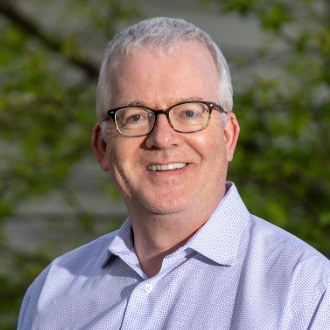
Jonathan Carter is the Associate Laboratory Director for Computing Sciences at Lawrence Berkeley National Laboratory (Berkeley Lab). The Computing Sciences Area at Berkeley Lab encompasses the National Energy Research Scientific Computing Division (NERSC), the Scientific Networking Division (home to the Energy Sciences Network, ESnet) and the Computational Research Division.
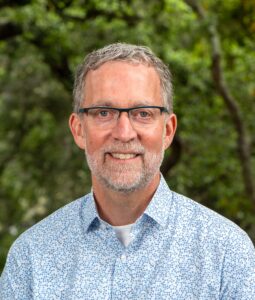
John Elliott is Chief Sustainability Officer at Lawrence Berkeley National Laboratory. He is responsible for directing and implementing the Lab’s sustainability strategy, built on a foundation of energy and water efficiency, utility cost savings, and advanced analytics. John draws on the local academic communities of Stanford and the Energy and Resources Group at University of California Berkeley, where he received undergraduate and masters degrees.
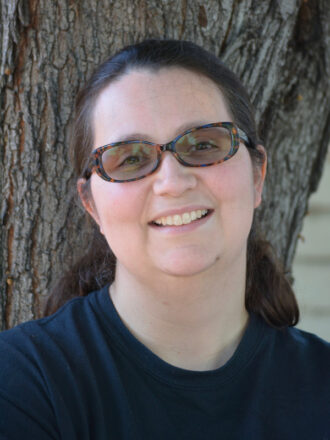
Rebecca Hartman-Baker leads the User Engagement Group at NERSC. She is a computational scientist with expertise in the development of scalable parallel algorithms for the petascale and beyond. Her other research interests include inverse and ill-posed problems, numerical optimization methods, and developing effective techniques for training users of HPC resources.
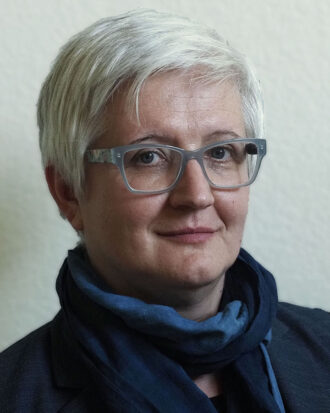
Ana Kupresanin directs the Scientific Data (SciData) Division in the Computing Sciences Areaat Lawrence Berkeley National Laboratory (Berkeley Lab). SciData Division transforms data-driven discovery and understanding through the development and application of novel data science methods, technologies, and infrastructures with scientific partners. Kupresanin is a Fellow of the American Statistical Association.
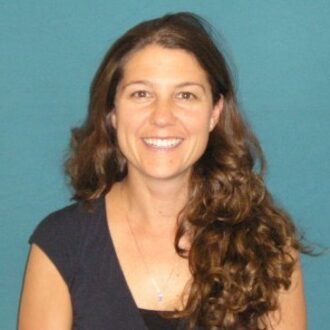
Susan Lucas is the Division Deputy of Business Operations for the Energy Sciences Network (ESnet) and the Scientific Networking Division. She leads the business office, overseeing operational logistics and administrative operations. She is a vocal advocate for employee mentorship and diversity, having served as a key member of the Berkeley Lab Mentorship Committee. She has a bachelor's degree in biology from the University of Oregon and an MBA from UC Davis.
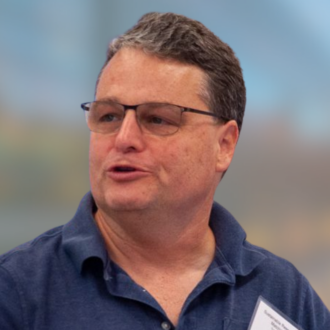
Computational scientist and group leader for the Applied Numerical Algorithms Group at Lawrence Berkeley National Laboratory. His research involves the development of algorithms and software for solving systems of PDEs using adaptive mesh refinement (AMR) finite volume schemes, high (4th)-order finite volume schemes for conservation laws on mapped meshes, and Chombo development and support.
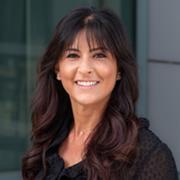
Sarah McGinn is the Environmental Safety and Health (ES&H) Program Manager, also referred to as the Division Safety Coordinator (DSC) for the Computer Sciences Area. She supports all aspects of EHS, including accident prevention, computer ergonomics, electrical safety, chemical hygiene, and hazardous waste compliance, to name a few. Sarah has worked at LBNL for six years and prior to the Lab she worked in the structural steel construction, food manufacturing, and solar energy industries.

Staff Scientist and Group Lead of the Center for Computational Sciences and Engineering (CCSE) at Lawrence Berkeley National Laboratory. I am interested in HPC implementations of multiphysics and multiscale algorithms for PDEs using structured adaptive mesh, particle/mesh, and machine learning algorithms.
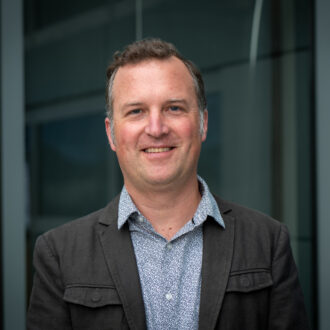
Stefan Wild leads the Applied Mathematics and Computational Research Division at Lawrence Berkeley National Laboratory, an inspiring team of applied mathematicians; computational, computer, and data scientists; and software/systems engineers solving some of the world's most challenging computational problems in a broad range of scientific and engineering fields.
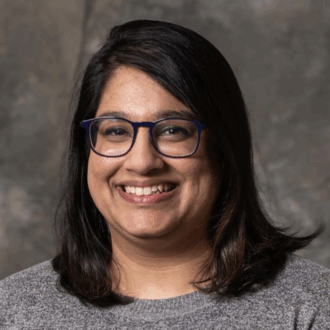
A Science Engagement Engineer at NERSC, Lipi works to help users engage with NERSC staff and with each other to bridge gaps in scientific computing. She is interested in improving the new user experience, as well as helping graduate students make better use of NERSC resources in preparation for their careers.