
Featured Speakers: Ben Erichson, Anastasiia Butko.
Date: Tuesday, July 28, 2026
Time: 10 a.m. – 11 a.m.
Where: 50A-5132. Virtual: Zoom Available
Research Spotlight Talk: Accelerating Flow Matching Models for Forecasting Physical Systems (Ben Erichson).
Research Spotlight Talk: QC and HPC: the path from the experimental to routine computing (Anastasiia Butko).
Featured Speakers: Ben Erichson (Research Scientist, AI & Learning Systems Group, SciData Division) and Anastasiia Butko (Computational Staff Scientist/Engineer, AMCR Division).
Date: Thursday, July 30, 2026
Time: 1 p.m. – 2 p.m.
Where: ZOOM ONLY.
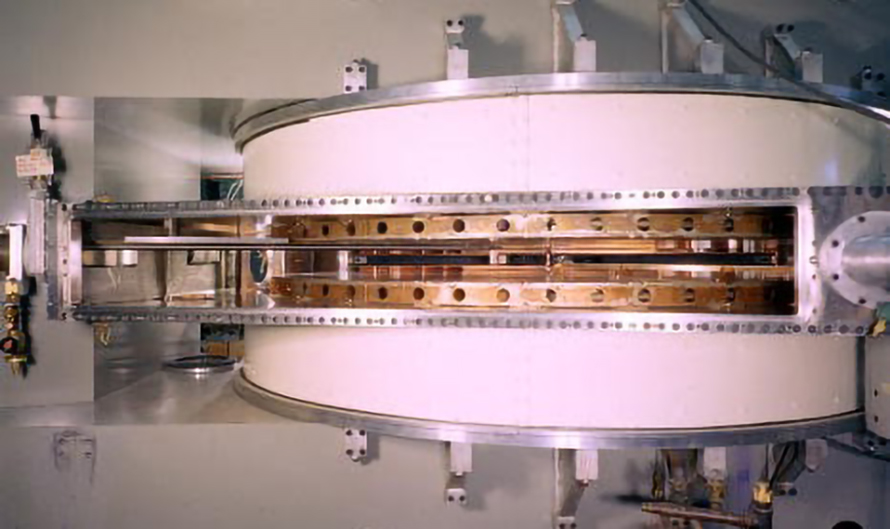
Part of the Nuclear Science Division, the 88-Inch Cyclotron supports ongoing research programs in nuclear structure, astrophysics, heavy element studies, and technology R&D by Lawrence Berkeley National Laboratory (Berkeley Lab) and UC Berkeley. Major instrumentation and facilities at the 88-Inch Cyclotron include the Berkeley Gas-filled Separator (BGS), the Berkeley Accelerator Space Effects (BASE) Facility, and the superconducting VENUS ion source, one of the most powerful Electron Cyclotron Resonance (ECR) ion sources in the world. The 88-Inch Cyclotron Program Head is Dr. Larry Phair.
Virtual tour hosted by the Nuclear Sciences Area.
Date: Friday, July 31, 2026
Posters to be printed and presented during the CS Area Poster Session are due for printing.
More details available soon.

Ben Erichson is broadly interested in understanding what makes deep learning systems work, and how we can make them more robust, secure, and efficient. His research combines scientific machine learning, dynamical systems, generative modeling, and AI safety, with an emphasis on building systems that are reliable under real-world deployment conditions.

Anastasiia Butko focuses on quantum computing systems and computer architecture, spanning the hardware-software stack from superconducting quantum technologies and classical control hardware to processor architecture, system software, and high-performance computing. More broadly, her work explores how emerging computing technologies can sustain performance scaling beyond the limits of conventional CMOS.