
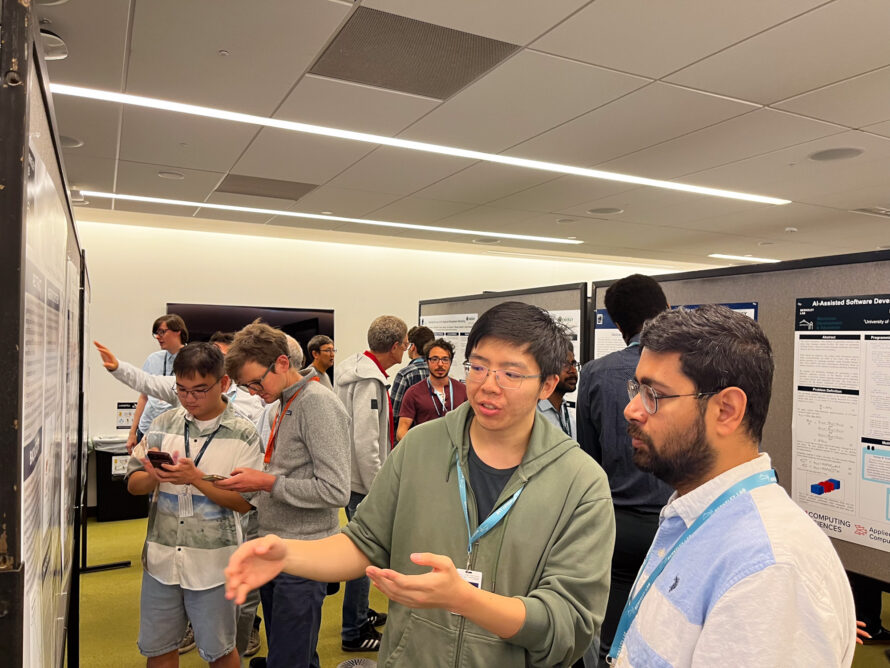
2026’s Computing Sciences Area Summer Program comprised 140 students, affiliates, and guest faculty. Several students were also enrolled in programs facilitated through Berkeley Lab’s A-LIFT office. Interns worked across a variety of departments and gained hands-on experience with cutting-edge tools.
For ten weeks, this cohort honed vital professional skills, from refining resumes to perfecting science posters. The experience wasn’t just theoretical; students got to tour incredible facilities like NERSC, the Advanced Light Source, and the Molecular Foundry. The program culminated on August 11th with an extensive Poster Session, showcasing all the hard work accomplished.
Andy Nonaka and Dan Martin co-chaired the Summer Program.
Nonaka reflected, “The level of participation and engagement from our CS Summer Program participants has been very strong this year. In particular, the discussions at our Research Spotlight series have been the most interactive and in-depth I have seen. The visitors I have interacted with show genuine curiosity to learn as much as possible about the diversity of research in CSA. I hope the talks, workshops, and tours the planning team has put together will inspire our visitors to continue to pursue a career in scientific research.” Martin added, “It’s really a thrill for Andy and me to be able to play a role in broadening their experiences while at the lab, and it’s been wonderful to get to know so many of the interns who are all so excited about what we do.”
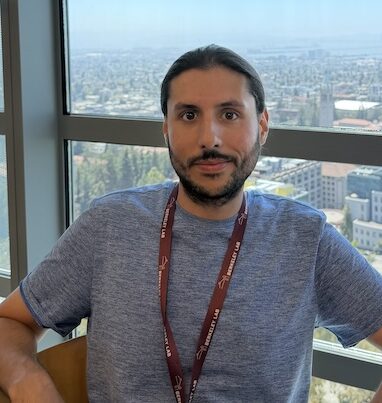
Armin Weinmann
Armin Weinmann is a junior at the University of Houston – Clear Lake, majoring in computer engineering. This summer, he was focused on applying a quantum optimization algorithm to community detection in data gathered from fMRI scans of the human brain. He worked with SciData’s Talita Perciano and the University of Houston’s Liwen Shih as a VFP intern. Weinmann notes that he first became interested in working at Berkeley Lab after taking a quantum computing course at his school and learning about the complex problems quantum computers are capable of solving. “I wanted to partner with experienced scientists,” Weinmann says, “and utilize the Lab’s resources to further my understanding of these problems and expand on the research being done at the intersection of neuroscience and quantum computing.”
Weinmann says that he feels both excited and humbled to have been part of an innovative project with the potential to uncover a more detailed understanding of neuroscience. “Working at the intersection of computational neuroscience and quantum computing has altered my academic trajectory,” Weinmann says. After working at Berkeley Lab, he now plans to pursue a master’s degree in computational neuroscience and has also made plans to incorporate applied math into his undergraduate degree plan. “The research being done into quantum computing applications at Berkeley Lab,” Weinmann says, “is pioneering the way for future research into even more applications of quantum algorithms as hardware is improved and software is developed to better utilize the computational power of quantum mechanics.”
SciData
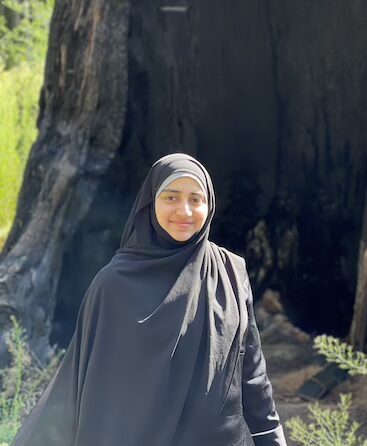
Banooqa Banday
Following a remote internship at Brookhaven National Laboratory, Banooqa Banday was drawn to in-person research. She promptly accepted an internship in the Computing Sciences Area at Berkeley Lab, noting that “Berkeley Lab’s reputation, along with the chance to work alongside brilliant people at a place with a history of Nobel Laureates made it stand out to me beyond just being another summer opportunity.” As a third-year PhD student in computer science at Texas State, Banday worked with AMCR’s Khaled Ibrahim to investigate the performance of LLMs in cloud versus local environments under her mentor’s guidance. “The goal,” she describes, “is to help the broader research community better understand which workloads are best suited for local execution, and where the need for cloud-hosted LLMs genuinely comes into play.”
Banday has greatly enjoyed her research experiences. She thoroughly enjoyed tours of NERSC (Perlmutter), the Advanced Light Source (ALS), and the Molecular Foundry. “Learning firsthand about the work being done at these facilities,” Banday says, “and how Berkeley Lab has consistently led scientific advancement across so many different fields, has left me amazed to be part of it, even in a small way.”
AMCR
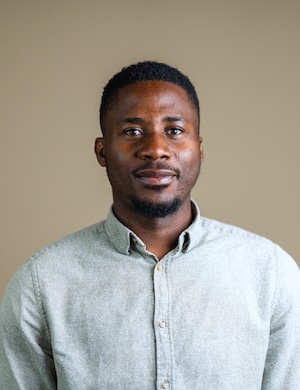
Daniel Benedict
Daniel Benedict is a graduate student in computer science at Texas Tech University, where he researches high performance computing and secure computer architecture. “My work,” says Benedict, “is driven by a simple question: How can we make the world’s fastest computers even faster, secure and more efficient?” This summer, he was at NERSC, working with Lisa Claus and Charles Lively to study the hidden performance characteristics of mathematical libraries running on modern CPUs and GPUs. He is interested in understanding why some algorithms thrive while others leave valuable hardware underutilized. Benedict is excited by his projects at Berkeley Lab, noting his lifelong fascination with the invisible engineering behind scientific breakthroughs. “The Lab sits at the intersection of world-class computing and real scientific impact,” Benedict explains, “making it the ideal place to turn years of research into solutions that researchers use every day.”
Benedict credits his work with giving him practical insight into optimizing next-generation computing systems. He observes, “[My internship has] reinforced my goal of pursuing a career where I can bridge research and production-scale systems to advance scientific computing that make scientific discovery faster, more efficient, and more accessible around the world.”
NERSC
Isiaha Rodriguez
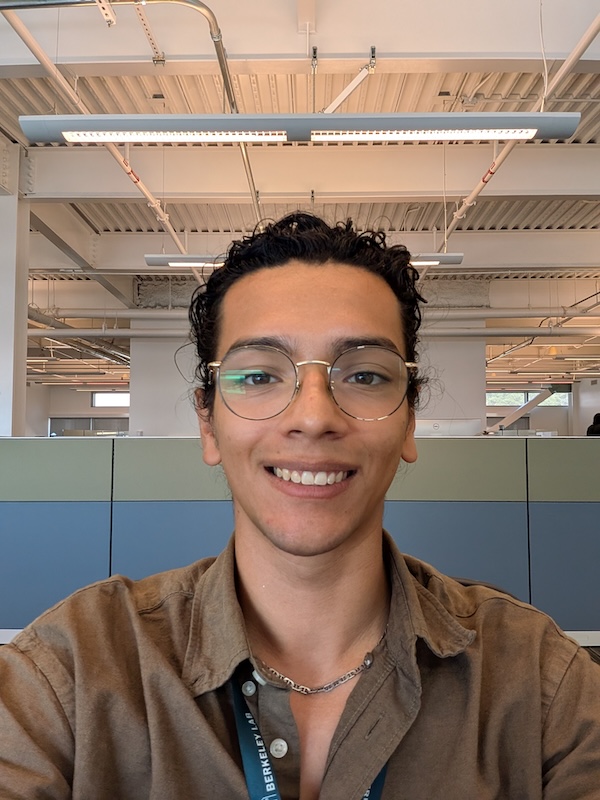
As a second-year graduate student in the applied mathematics program at Arizona State University, Isiaha Rodriguez worked with SciData’s Talita Perciano this summer. His research centered on multimodal machine learning models for catalyst reactions, specifically developing formal, mathematically informed tools to evaluate when fusing different machine learning models will increase performance.
This marks Rodriguez’s first internship at Berkeley Lab. He is eager to broaden his applied math expertise through new interdisciplinary collaboration. “The experience at Berkeley Lab [has] affirmed that larger-than-life questions can be tackled with the right team and communication,” he explains, “I’m excited to be in a place where I can frequently meet new scientists and discuss our work together. I want this to persist throughout my career, and I cannot wait for the opportunity to jump back into the Lab.”
SciData
Kaiwan Bilal
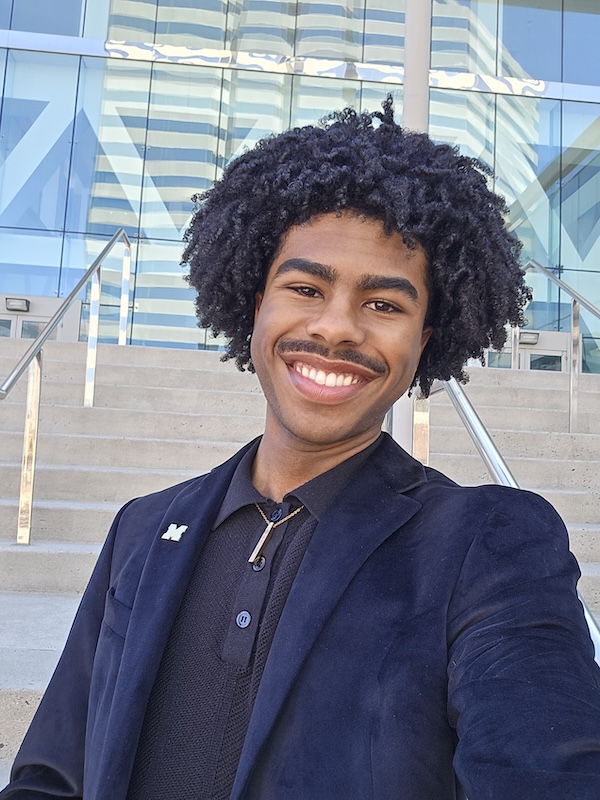
Kaiwan Bilal is a sophomore at the University of Michigan, pursuing a degree in engineering physics with a concentration in quantum molecular engineering. This summer, as a SULI intern, he modeled anharmonic molecular vibrational spectra under the supervision of Dr. Phillip Thomas in NERSC. Bilal’s work presents a comprehensive, robust, and fully variational pipeline for automating the molecular spectroscopy process. He was drawn to Berkeley Lab because of its reputation for in-situ interdisciplinary research. “From computationalists to experimentalists studying fields across exotic particle physics, molecular dynamics, and genomics,” Bilal notes, “working at Berkeley Lab provides unparalleled access to world-class researchers in numerous fields.”
After spending time working side-by-side with scientists in the Computing Sciences Area, Bilal is even more excited about pursuing future research in quantum research. “My experience at Berkeley Lab has solidified my desire to contribute to scientific research at the national level,” Bilal explains, “LBNL’s most eye-catching facet is that we’re looking to stretch computational capability beyond what is currently possible.”
NERSC
Laura Kallem
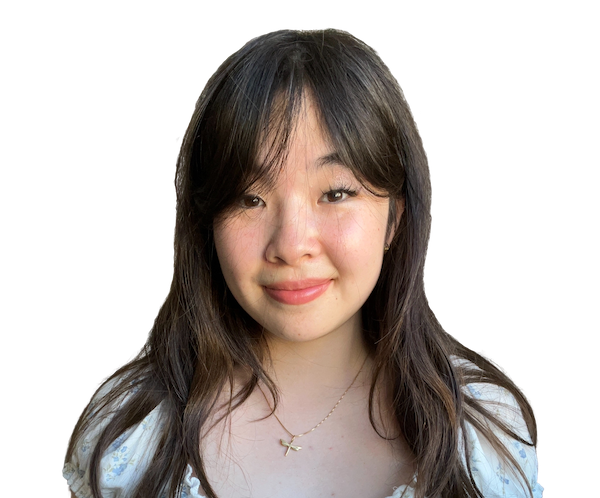
Laura Kallem is an incoming junior at UC Davis in Electrical and Computer Engineering and a community college transfer from Diablo Valley College. She is a returning CCI intern, and worked this year with Farzad Fatollahi-Fard and Luisa Patricia Gonzalez Guerrero in AMCR’s Computer Architecture group. Kallem got hands-on experience creating documentation and patching bugs for the Modular System for Acceleration Integration (MoSAIC), a hardware exploration platform for message-passing computing. “Before coming here,” Kallem says, “I was amazed by how scientists conceive and execute world-changing ideas, and I always wondered about the process.”
Kallem is thrilled to have the opportunity to work with the AMCR group once again. “The field of computing is changing so rapidly,” she notes, “it is an exciting time to be a scientist!” Kallem wants to stay in the field and watch how computer architecture and hardware design will change in the coming years, especially to learn how new approaches in quantum computing will change the field. “Because of my summer experiences,” she explains, “I know I want to pursue a PhD.” Her goal is to one day become a research scientist at a national laboratory like Berkeley Lab.
AMCR
Maryori Peralta
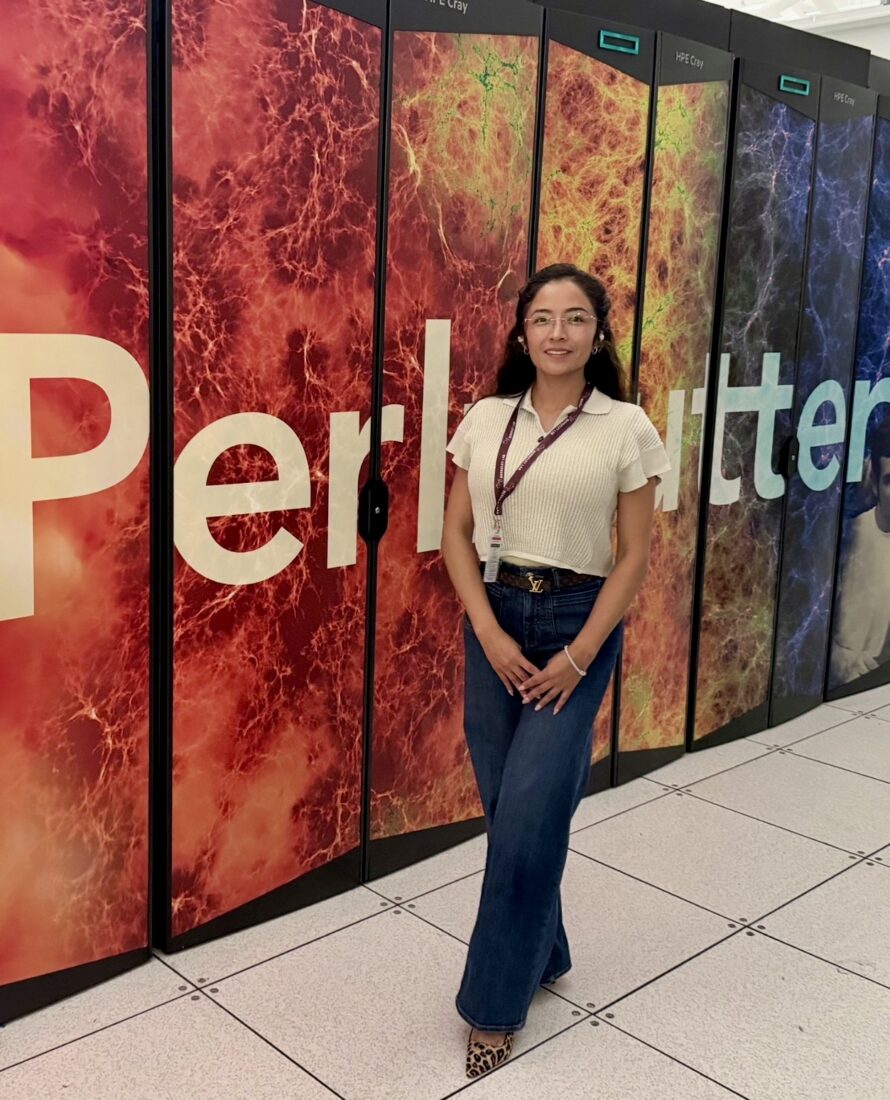
Some experiences change how you see yourself, and others change your trajectory. For Maryori Peralta, her summer internship at Berkeley Lab did both. Peralta is an international senior student in data science at the College of Coastal Georgia. She worked with the Scientific Data Division as part of the AquaData Program with SciData’s Talita Perciano, Baboucarr Dibba and Chris Pestano, on researching quantum algorithms. “By evaluating quantum algorithm performance on current hardware,” Peralta says, “I developed an analytical pipeline that successfully bridges theoretical abstraction with experimental testing. This work showed me that every discovery, no matter the scale, is a decisive step toward the future of technology.” Peralta found her experiences at Berkeley Lab incredibly inspirational. “Beyond the technical breakthroughs,” she describes, “Berkeley Lab taught me that meaningful research begins with a bold question, thrives through collaboration, and drives practical solutions that can transform the future for everyone.”
SciData
Matthew Hudes
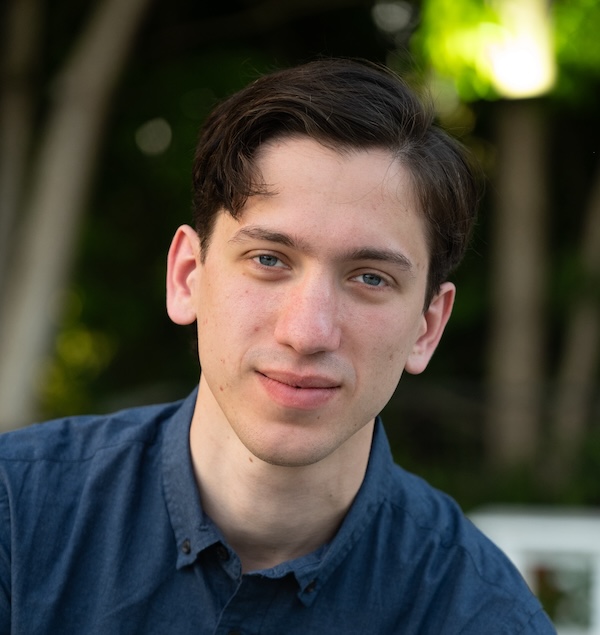
Matthew Hudes first learned about Berkeley Lab’s Center for Computational Sciences and Engineering (CCSE) by reading the group’s papers and watching a captivating seminar given by Dr. Srivastava. This summer, he is excited to be a SCGSR fellow and worked directly with the group to develop and validate numerical tools for assessing spontaneous stochasticity in multiscale turbulent hydrodynamic flows. “Understanding this phenomenon has implications for making predictions about turbulent systems on many different scales,” Hudes says, “from the air in the room you are sitting in to astrophysical systems.”
Hudes has been thrilled to directly participate in CCSE’s research. “CCSE is the world-leading group in developing efficient codes for fluctuating hydrodynamics simulations,” he explains. “The codes they develop have been carefully validated against both theoretical expectations (such as satisfying the fluctuation dissipation theorem) and experimental results.” Before this internship, he had never worked at a national laboratory. His SCGSR internship has opened his eyes to the possibility of a government lab as a long-term career option. “The depth of expertise here is amazing,” Hudes exclaims, “and [the researchers] are just fun to work with – such nice, inviting, and curious people!”
AMCR
Namita Shah
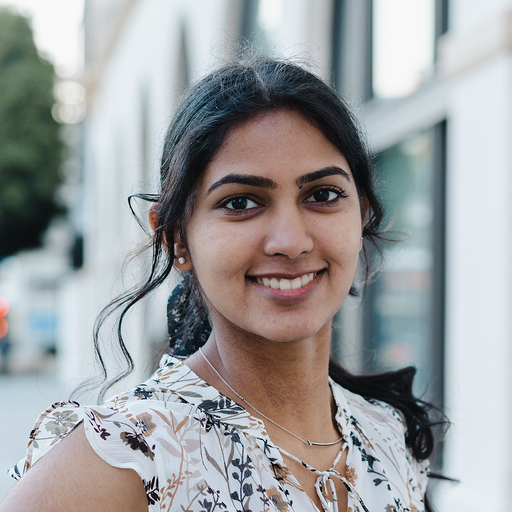
Namita Shah, a computer science graduate student at the University of Michigan, spent her summer at NERSC characterizing the performance of auxiliary-field quantum Monte Carlo calculations on HPC systems. As an undergraduate, Shah encountered researchers at conferences who highly praised Berkeley Lab’s collaborative culture and novel computational science projects. “I knew Berkeley Lab was the ideal place to learn directly from scientists doing some of the most impactful research in those areas,” she says.
Shah has been excited to see her team expand to include expertise across new domains—chemistry, quantum computing, supercomputing, performance analysis—as their work grows in scale and complexity. “Seeing that many perspectives converge on a single problem,” Shah remarks, “is the nature of computational science itself!” Her internship has provided her with experience in multiple areas. In parallel, she is also developing a hands-on tutorial to teach NERSC users end-to-end performance analysis, helping them apply similar techniques to their own scientific applications. “Berkeley Lab has given me a community of bright, supportive people to learn from and turn to,” she observes. She is grateful for what she has already learned during her internship and looks forward to learning even more from her mentors.
NERSC
Nathan X. Marshak
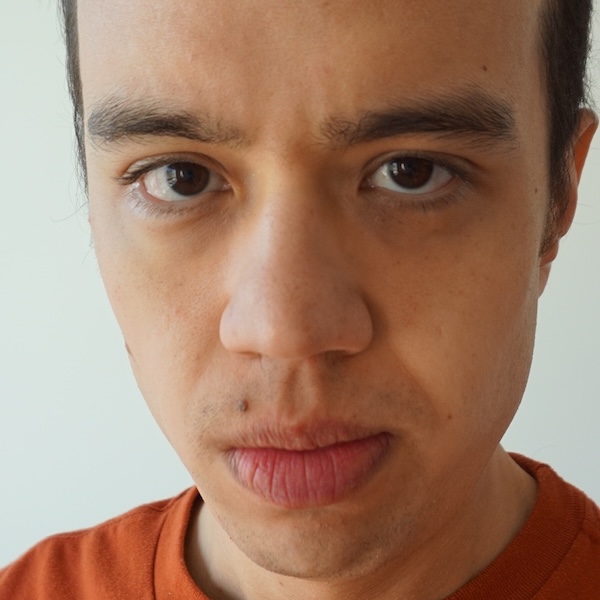
Nathan Marshak has long admired Berkeley Lab. As a doctoral student at the University of Utah, he has been collaborating with Berkeley researchers on radiation transport in Nyx, a cosmological simulation software, for quite some time. During his doctoral research, Marshak built on existing Nyx code by implementing a high-fidelity tool (ray tracing), allowing cosmologists to gain a much more accurate picture of how powerful radiation travels and affects the cosmos. Since multiple codes exist for this purpose, this summer Marshak worked alongside SciData’s Zaria Lukić in the Computational Cosmology Center to compare how these different software tools simulate radiation behavior in the universe. “We can run simulations at larger scales than were previously possible,” Marshak observes, “We have the compute and expertise to do this.”
Marshak has been excited to compare these various codes and methods. “My experience is exposing me to new directions and possibilities,” he explains, “For instance, prior to coming here, I was not aware of how active the quantum computing field has become.” He is eager to be onsite, meeting other researchers, and gathering more ideas about his next steps.
SciData
Preston Ruddell
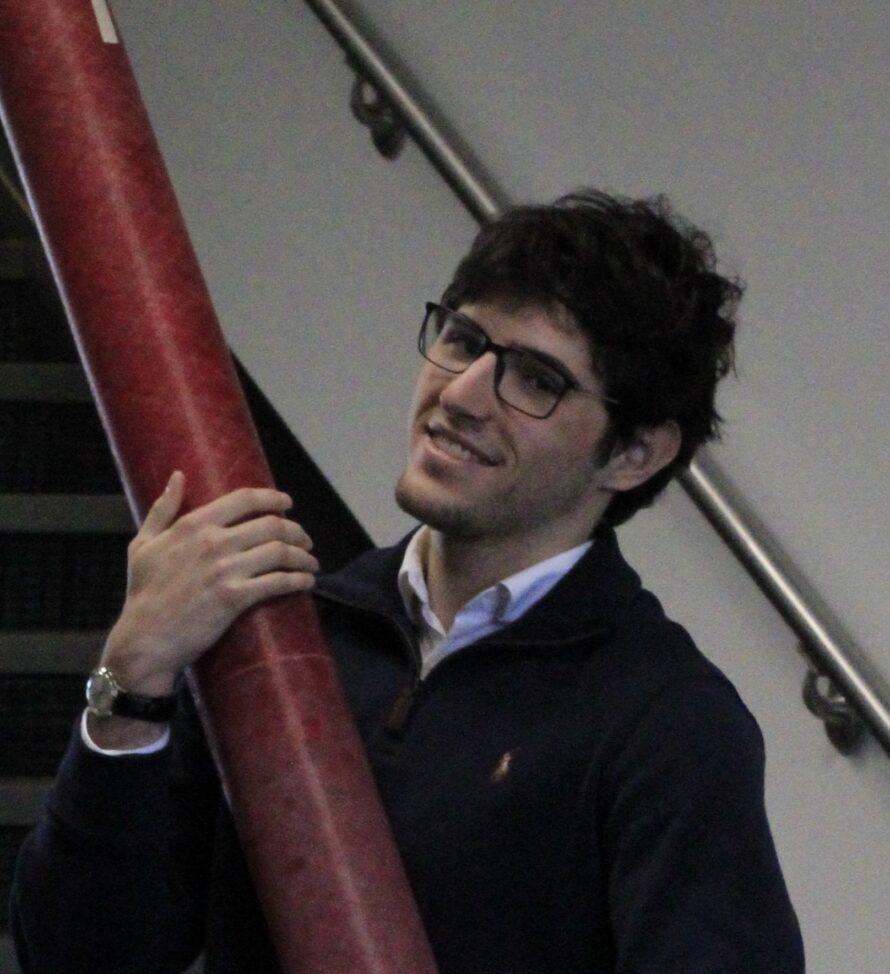
Preston is currently attending the University of Houston – Clear Lake, where he is an incoming senior majoring in computer engineering with a minor in mathematics. This summer, he worked with SciData’s Talita Perciano, focusing on using quantum algorithms for brain community detection. “One thing that I love most about my research,” explains Preston, “is that we are taking this relatively new technology that people still haven’t fully figured out and finding an application for it.” He loves learning new things and has enjoyed meeting other people who feel similarly at the Lab. “Through working on my research,” he says, “I found that I enjoy working on more ‘niche’ topics and would like to explore quantum as a career.”
SciData
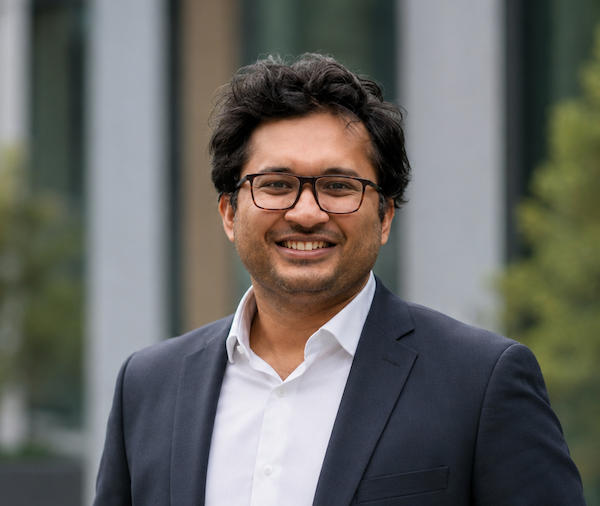
Sefat Rahman
Sefat Rahman, a Ph.D. candidate at the University of Utah, studies data visualization and topological data analysis. This summer, he collaborated with SciData’s Gunther Weber to apply topological data analysis to scientific machine learning. Using the Mapper tool, Rahman examined how machine-learning models behave during training. “As artificial intelligence and machine learning continue to expand into scientific fields,” Rahman explains, “tools like this can help researchers better understand how models learn, identify potential weaknesses, and improve model reliability.”
As a Ph.D. student, Rahman spent several years developing expertise in topological data analysis. “My experience at Berkeley Lab,” he says, “has given me the opportunity to apply that knowledge to real-world machine-learning problems, particularly models used in chemistry and other scientific domains.” His internship offered deep insights into the connection between topology, data visualization, machine learning, and scientific discovery. “In the future, I hope to extend these methods to other scientific applications,” Rahman says, “ and contribute to the development of machine-learning models that are not only effective but also interpretable and trustworthy.
SciData
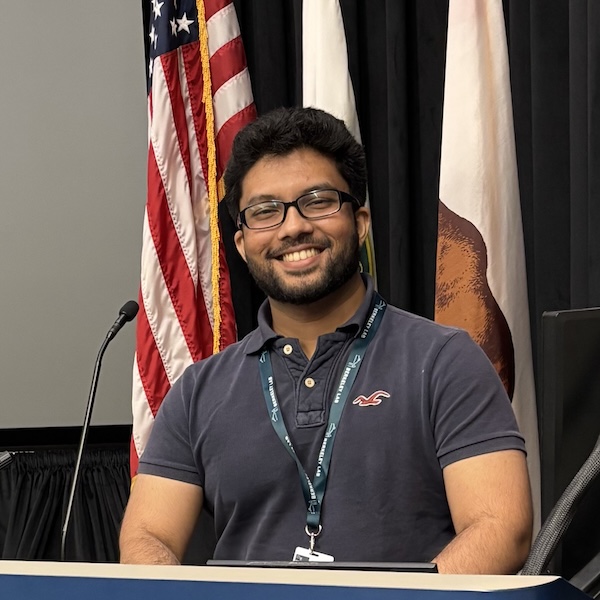
Shadmun Shahed
Shadmun Shahed has always been passionate about both the advancement and application of technology. Reading the biographies of numerous scientists and laureates introduced him to Berkeley Lab,convincing him that it is a place where researchers are passionate about turning new ideas into practical, real-world tools. This summer, Shahed collaborated directly with these researchers. He is a Master of Science graduate student undertaking a VFP internship with Hardik Gohel at Texas A&M University-Victoria. They worked alongside SciData’s Talita Perciano on creating the software for Q-CORE (Quantum Classical-to-Quantum Encoding Research Engine). “ The goal of our project,” explains Shahed, “is to develop a platform for evaluating quantum data encoding strategies for scientific applications relevant to the Department of Energy.”
This was the first internship where Shahed has had the opportunity to use his toolset of software engineering. “For my research specifically, I am very excited to see through the development of our research engine,” Shahed explains, “I believe it will have an enormous impact in quantum computing in the years to come. Our part of the project can also be expanded further in the future with the inclusion of evaluating hardware systems and potentially much more.” Shahed says that the experiences that he’s had this summer have greatly influenced his career goals and given him the opportunity to hone his technical skills for future endeavors.
SciData
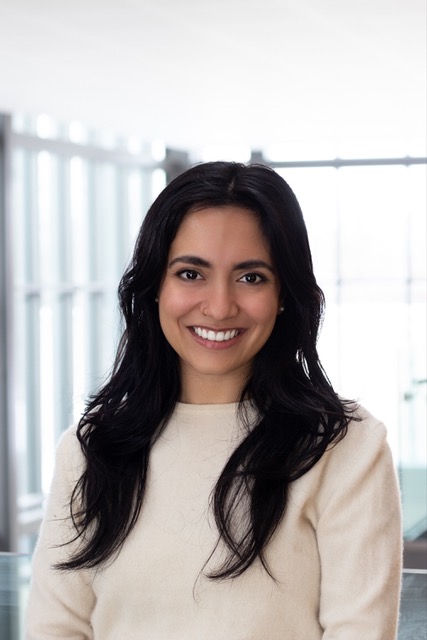
Shaina Smith
Shaina Smith is a second-year PhD student in Computer Engineering at Queen’s University in Kingston, Ontario, Canada. This summer, she was at NERSC, working alongside Zhengji Zhao and delving into energy efficiency, particularly examining the impact of power capping on performance.
Many research areas excite Smith, including energy efficiency and high performance computing. She’s fascinated by NERSC’s work on artificial intelligence and captivated by a recent presentation that she watched about the ASCRIBE virtual reality project. “This research enables them to engage in immersive analytics by allowing them to explore intricate scientific structures and datasets. They are also able to do similar things to what is depicted in Iron Man using hand gestures and various interfaces.” Smith marvels, “It was truly captivating!” Smith says that her work at Berkeley Lab has already provided her with invaluable insights into the workings of a national laboratory and provided so many opportunities to collaborate on many types of projects. “Engaging in conversations with people at the Lab has ignited a passion within me to pursue a career in research after graduation,” Smith says, “with the objective of contributing to the improvement of energy efficiency and sustainability in high-performance computing systems and data centers.”
NERSC
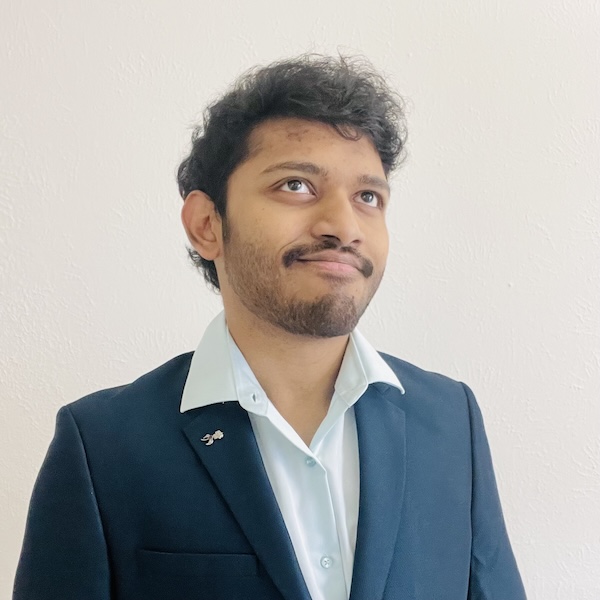
Sounak Bhowmik
Sounak Bhomilk is a doctoral student at Southern Methodist University. He’s brought his expertise in computer engineering to Berkeley Lab’s SciData Division. As a VFP intern, he helped Hardick Gohel, an associate professor at Texas A&M University, and SciData’s Talita Perciano on the Q-CORE project. “Q-Core is a research tool,” he explains, “to help anyone jump into QML research without expecting them to know much about the algorithms.”
Bhowmilk is passionate about the current AI landscape and learning new ways to understand the domain of mechanistic interpretability. He is greatly enjoying his time at Berkeley Lab, and feels like he is working around “the smartest minds in the world!” He says that he’s learned that, “when you remove the expectation from yourself, there is no end to what you can build and achieve.” He looks forward to returning to Building 59 as a researcher in the future.
SciData
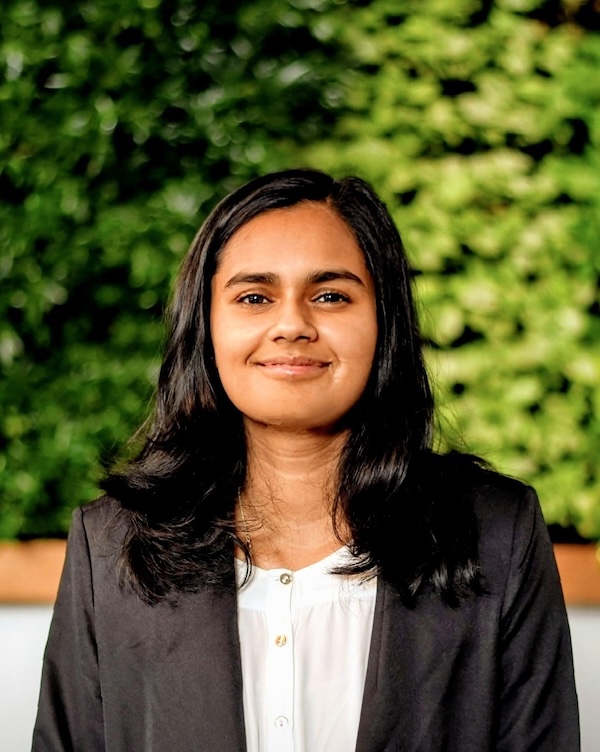
Tanushree Subramanian
Drawn to environments where technology meets real-world impact, Tanushree Subramanian is excited to have connected with a group of researchers working at this intersection. Subramanian is a junior at Rose-Hulman Institute of Technology, majoring in computer science. This summer, she worked with SciData’s Dan Gunter to integrate agentic AI into PrOMMiS, modeling software used to simulate minerals processing plants. “My work,” she explains, “involved building AI-powered skills that allow engineers to interact with complex simulations more intuitively, bridging the gap between advanced scientific computing and the people who use it every day.”
Subramanian is inspired by her colleagues’ constant curiosity regarding the latest tech innovations and how swiftly they integrate them into their workflow. “Every one of them approaches their work with passion and intellectual creativity,” she observes, “that elevates not just the outcomes but the entire process.” Her internship has helped her define what truly excites her. “It has shown me the kind of work I want to pursue,” she says, “ at the intersection of AI, scientific computing, and real-world problem solving.”
SciData

Vedant Sawal
Vedant Sawal is a computer science graduate student at San Jose State University. This summer, he was at NERSC, focusing on developing and testing observability infrastructure to scale for Doudna, NERSC’s upcoming exascale supercomputer planned for 2027. “As HPC systems grow larger and more complex, they generate massive amounts of logs, metrics, and operational data,” explains Sawal, “so my project’s focus is to improve monitoring, debugging, and system reliability for future exascale computing environments.”
Vedant was drawn to Berkeley Lab due to its reputation as a world leader in advanced supercomputing systems and his interest in cutting-edge HPC technology and exascale systems like Doudna. “This internship has given me the chance to contribute to real infrastructure that supports large-scale scientific research,” he says, “while also learning from experts in high-performance computing.” He is inspired by how Berkeley researchers solve challenges at the intersection of hardware, software, data pipelines, monitoring, and operations to support national-scale scientific discovery. “Working on real logging and monitoring pipelines,” he says, “has helped me connect classroom concepts to practical systems that support scientific computing.”
NERSC