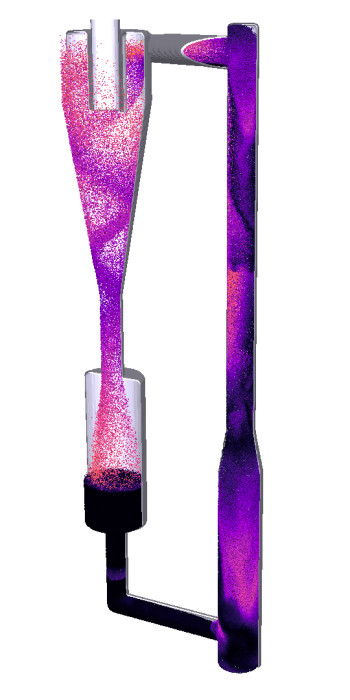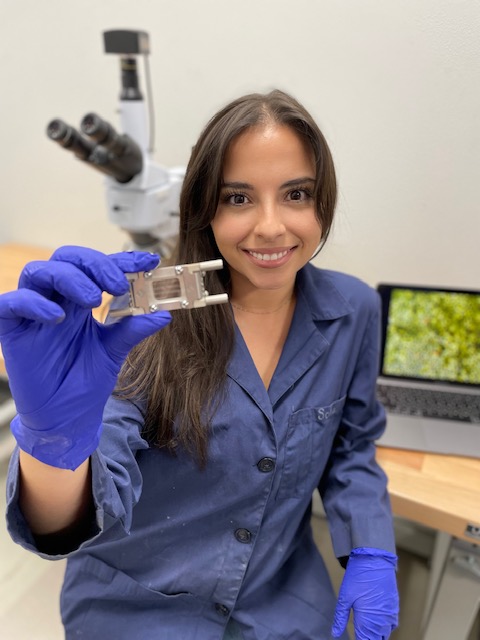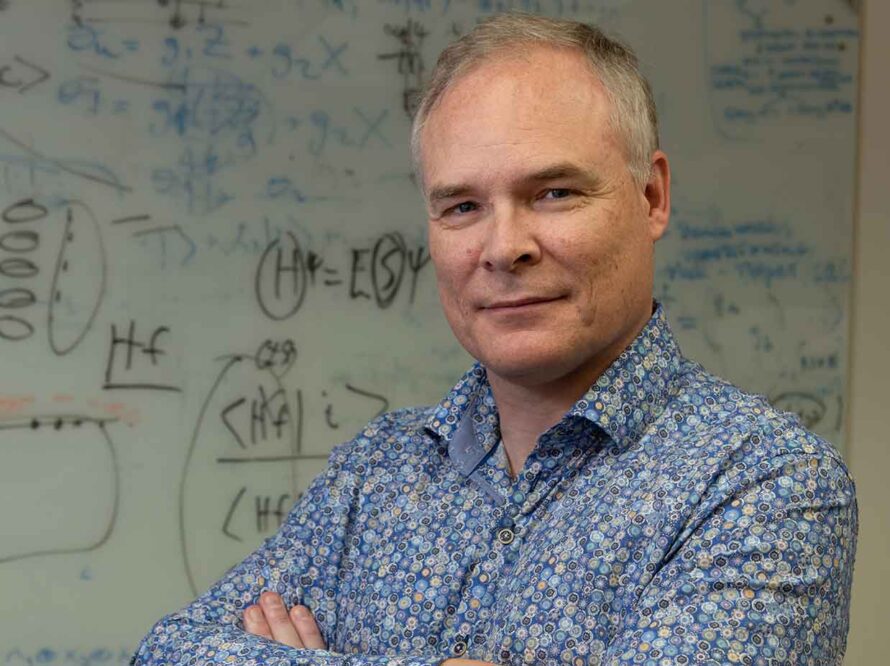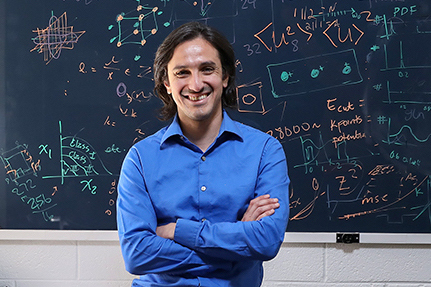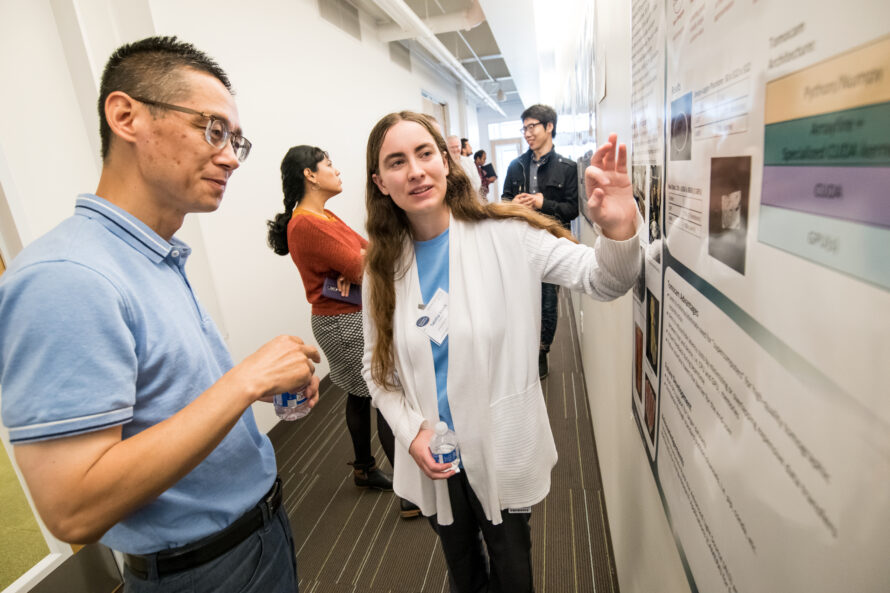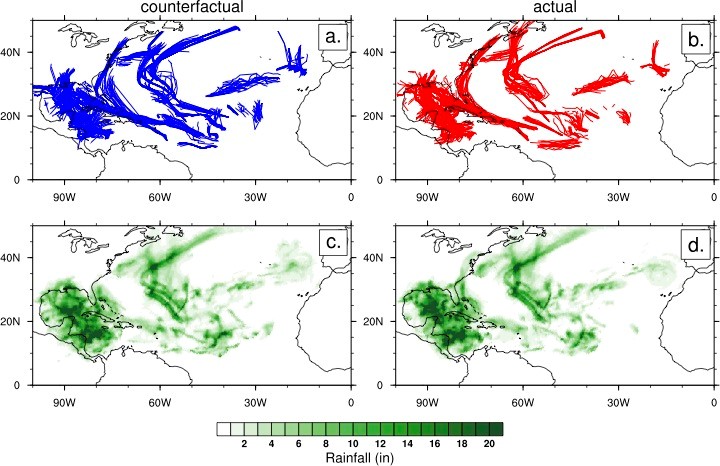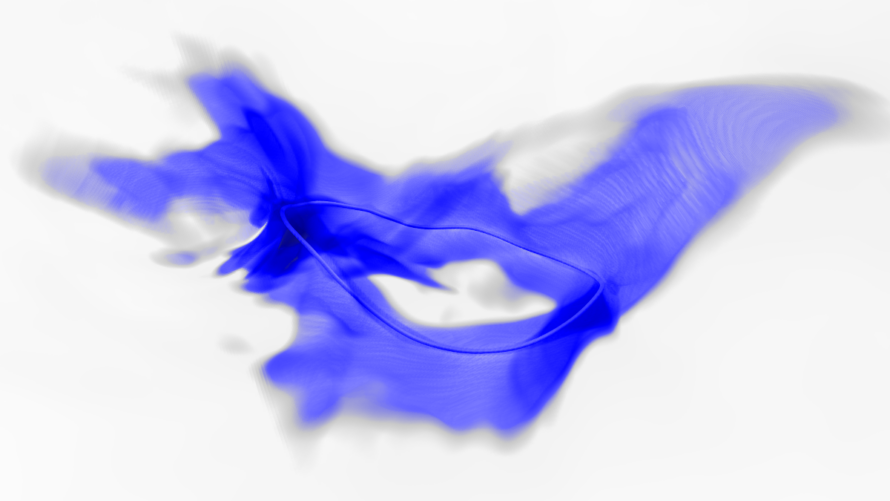
Simulated storm tracks that match observed named storms and ensemble average accumulated rainfall in inches for the 2020 North Atlantic hurricane season (June 1 to November 30) for the (b,d) actual and (a,c) counterfactual ensembles. (Credit: Kevin Reed, Stony Brook University) In their search for the axion particle, scientists focus their simulations on axion strings, topological defects in the soup of the early universe. Here, an axion string is rendered as a dark blue loop emitting axions. (Credit: Malte Buschmann, Princeton University) Running simulations at NERSC, the research collaboration found that the effect of climate change on future storms in the San Francisco Bay Area will be significant, leading to more powerful storms unleashing substantially more water. (Credit: Brocken Inaglory via Wikimedia Commons) Osni Marques has been tapped to lead the Training and Productivity effort in for DOE's Exascale Computing Project. (Credit: Thor Swift, Berkeley Lab) Exascale Computing Project Semantic segmentation: Automated detection of dendrites (blue) and pitts (red) using Y-net, a deep-learning algorithm to automate the quality control and assessment of new battery designs that was run at NERSC on Cori and Perlmutter. A dead star explodes as a Type Ia supernova. (Image credit: NASA) The researchers demonstrated this new error mitigation approach by simulating the evolution of a chain of six spins (top). Simulating for the longest time requires a circuit that contains 210 CNOT gates. The comparison of the real data from the quantum computer and the mitigated data shows how close the group’s approach comes to the exact results. Sherry Li stands with arms crossed in front of a whiteboard filled with complex mathematical equations, diagrams, and notes. The whiteboard includes various symbols, graphs, and annotations related to statistical models, including a hidden Markov model. The individual is dressed in a dark, long-sleeved top, and the background is a classroom or office setting, suggesting an academic or research environment.
Computing Sciences logo