
News

DIII-D National Fusion Facility, NERSC, AMCR, and ESnet Collaboration Speeds Nuclear Fusion Research
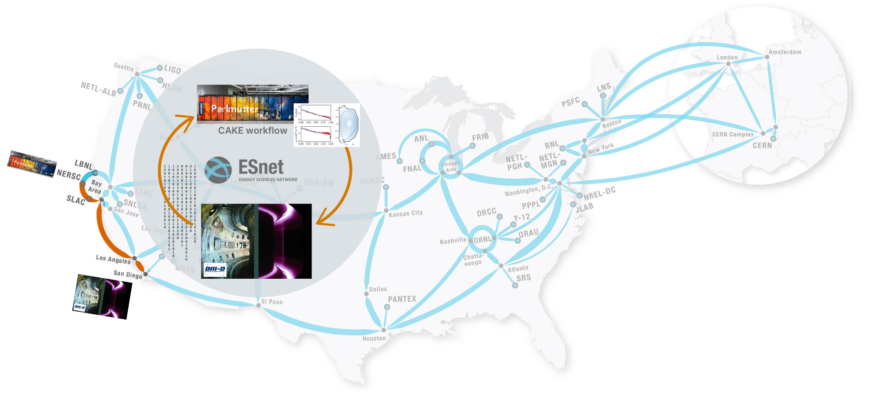
The Superfacility model connecting DIII-D and NERSC via ESnet enabled DIII-D to send fusion experiment data to NERSC’s Perlmutter supercomputer for large-scale automated analysis and high-fidelity reconstruction of plasma pulses.

The Power of Numerical Analysis in Quantum Chemistry
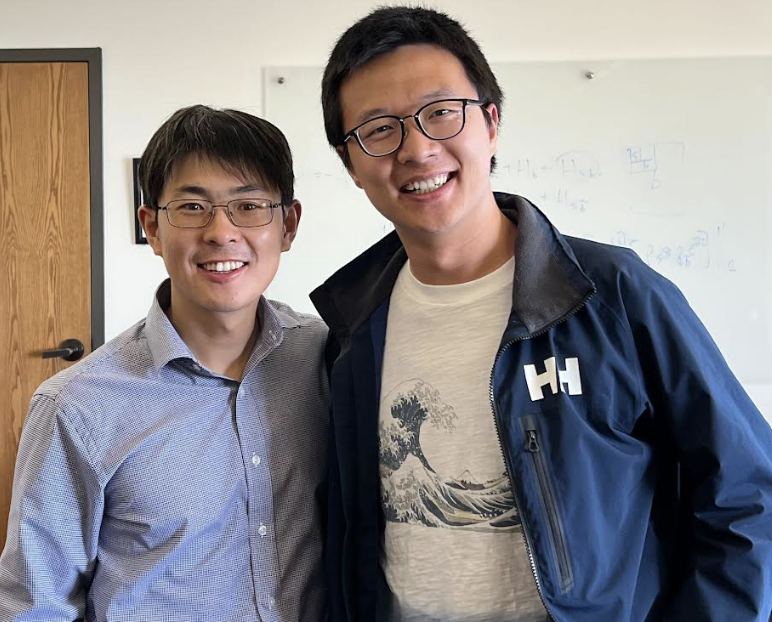
Dr. Lin Lin (left), a faculty scientist in the Applied Mathematics and Computational Research division at Berkeley Lab and a Professor of Mathematics at the University of California, Berkeley; and Dr. Xin Xing (right), a former postdoctoral scholar from Lin’s group at UC Berkeley who is now at Apple.

Celebration Spotlights Phil Colella’s Remarkable DOE Career
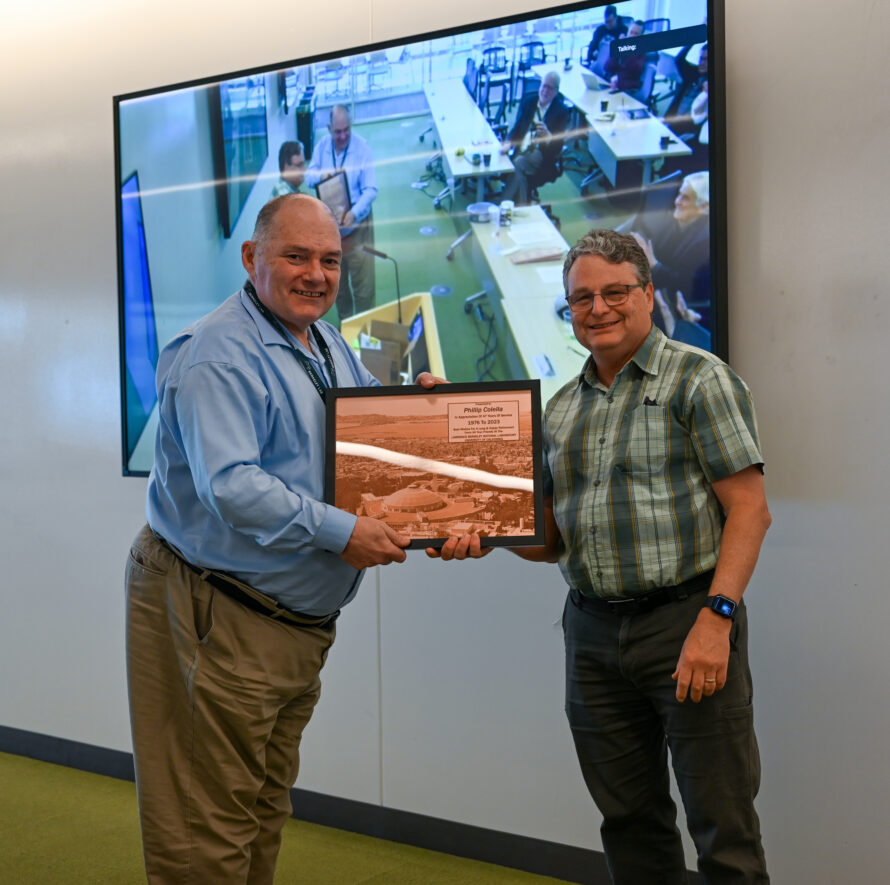
Daniel Martin (right) presents a retirement plaque to his mentor, Phillip Colella (left).

David Brown Honored with SIAM Prize for Distinguished Service to the Profession

David Brown

AMCR’s Chao Yang Named 2024 SIAM Fellow

Chao Yang

2024 CSA Postdoc Symposium Showcases 26 Early Career Researchers
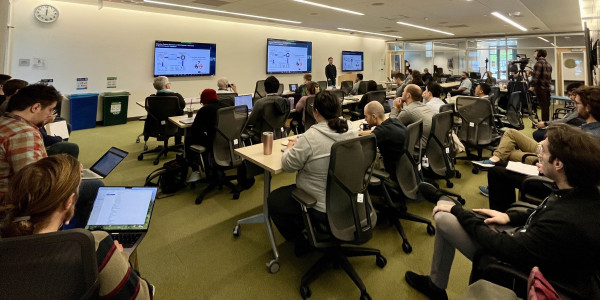
During the symposium, postdoctoral researchers currently working at the Lab shared 10-minute slide presentations on their projects with an audience of peers, mentors, and coworkers, followed by interactive Q&As throughout the day

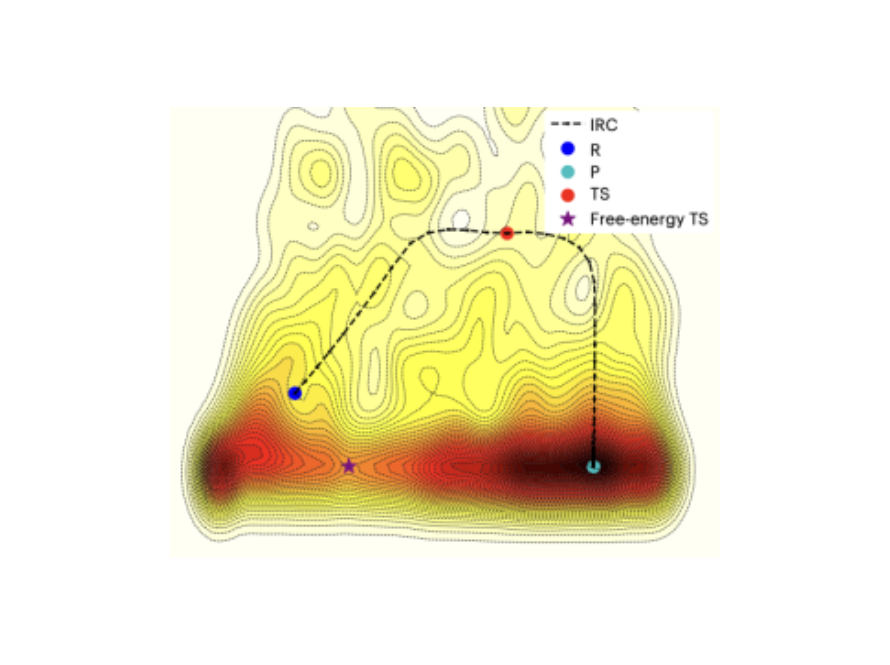
Machine Learning Yields More Efficient Hydrogen Combustion Reactivity Modeling
Berkeley Lab Affiliate Giulia Guidi Awarded SIAM’s Supercomputing Early Career Prize

In a Warming World, Climate Scientists Consider Category 6 Hurricanes
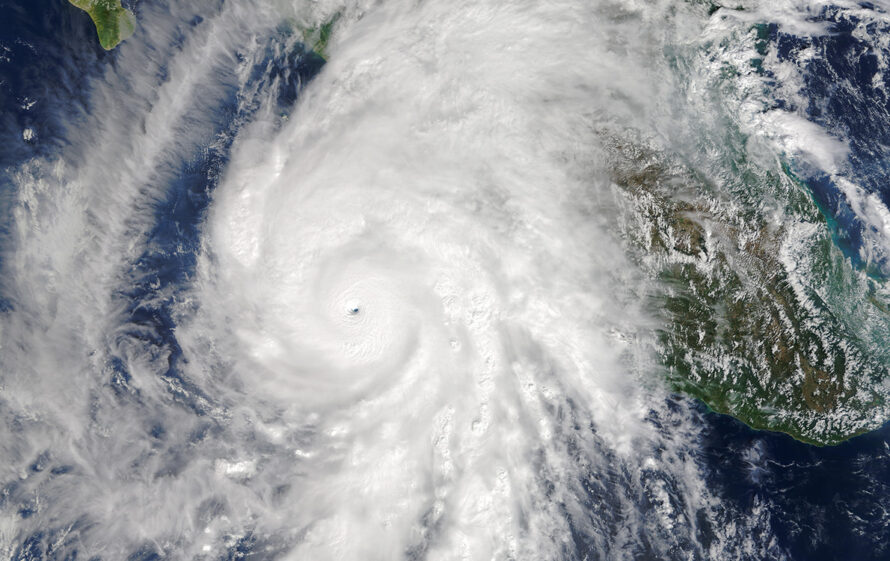
Hurricane Patricia Bears Down on Mexico's Pacific Coast on October 23, 2015. Image Credit: NASA Goddard Spaceflight Center

New Tomographic Reconstruction Algorithm Developed at Berkeley Lab Sets World Record
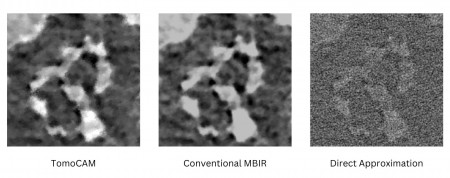
Reconstructions of a material sample from a sparse set of projection data using TomoCAM, conventional MBIR, and direct approximation methods. TomoCAM delivers higher-quality reconstructions compared to direct approximation methods while being 15 times faster than conventional MBIR methods.

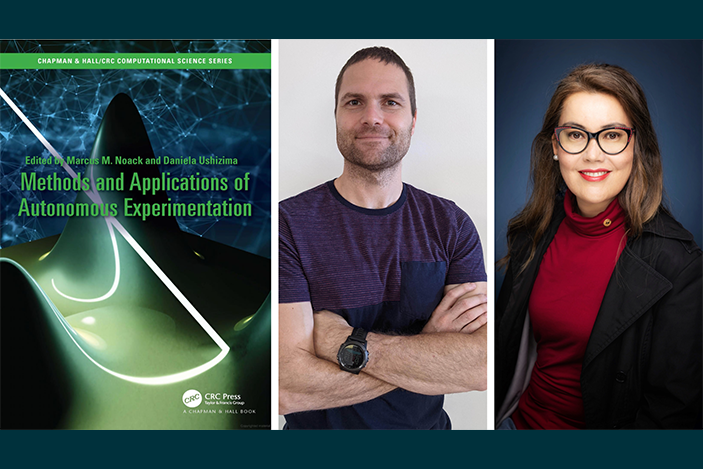
Berkeley Lab Researchers Publish Pioneering Book on Autonomous Experimentation
AMCR’s Wehner Explores Impact of ‘Extreme Event Attribution’ on Climate Science Research
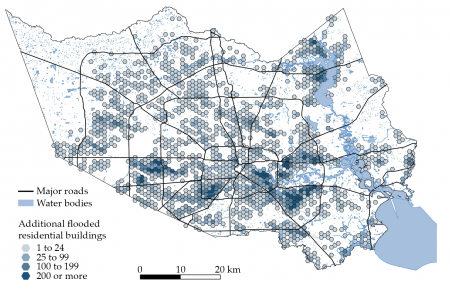

Additional anthropogenic flooding: Each hexagonal bin symbolizes the upper limit of the number of residential buildings that would not have flooded without the added impact of climate change in Harris County, Texas, during Hurricane Harvey in 2017. (Credit: Smiley, K.T., Noy, I., Wehner, M.F. et al. Social inequalities in climate change-attributed impacts of Hurricane Harvey. Nat Comm 13, 3418, 2022. https://doi.org/10.1038/s41467-022-31056-2)
Computing Sciences logo